


Panama
Two oceans, one remarkable route
Combine the canal and city energy with cloud-forest highlands, wildlife-rich coasts and Caribbean island time.
Nat Edwards / Wikimedia Commons, Public domain · Image licence
The honest overview
Get to know Panama before fixing the route.
Panama is famed for the Panama Canal, its Caribbean and Pacific coastlines either side of a single narrow isthmus, and Bocas del Toro's laid-back island cluster, attracting engineering-curious travellers, island-hoppers and digital nomads alike from across the Americas and beyond. Panama is known for being the natural link between Central and South America, thanks to sitting at the southern end of the Pan-American Highway, the hard stop the Darién Gap puts on any onward overland route, and an economy still shaped by the canal that cuts the country in two, making it as much a destination in its own right as a staging post for the rest of the continent.
Part of the joy of backpacking in Panama is deciding what deserves more time. Keep space for weather changes, longer travel days and recommendations from people you meet on the road.
Card is widely accepted in Panama City and larger towns, but carry cash for smaller towns, water taxis and the islands, where card machines are unreliable or simply don't exist.
There's no single fixed route through Panama, and plans tend to shift once you fall in with other travellers moving the same direction. That said, most backpackers run a loop between Panama City, Boquete (and the Chiriquí highlands) and Bocas del Toro, sometimes swinging through David as the transport hub in between. San Blas (Guna Yala) is usually tacked on as a separate multi-day trip from Panama City rather than folded into the loop. For those continuing south, there's no road through the Darién Gap into Colombia – the classic workaround is a 4–5 day sailboat crossing via San Blas to Cartagena, which has become a rite of passage in its own right and is worth booking well ahead in peak season.
Season by season
What each season means for your trip
Panama's weather can change sharply by region and elevation. These are planning patterns, not guarantees.
Drier travel window
The dry season ("verano"), and the best weather of the year across most of the country. Expect 27–32°C, blue skies and low humidity, making this peak time for Boquete's highlands, canal tours and the Pacific beaches. It's also the busiest and priciest stretch to travel in.
Wetter travel conditions
The wet season sets in ("invierno"), though it rarely rains all day. Expect 27–31°C with intense but short afternoon downpours, and everything turning a deeper green. Roads in remote provinces can get rougher going.
Wetter travel conditions
The wettest stretch of the year on the Pacific side, with heavier, more prolonged rain and a higher chance of flooding or landslides in low-lying and rural areas. Some unsealed roads become properly difficult to pass.
Wetter travel conditions
mid-December – Rain tapers off on the Pacific side as the dry season approaches, though it's still a transitional, showery month. The Caribbean coast, including Bocas del Toro, runs on a different pattern entirely – it sees rain in some measure most months of the year, and doesn't cleanly follow the Pacific side's dry/wet split. We believe October–November brings its heaviest spell there, worth double-checking closer to your dates if Bocas is a big part of the trip.
Check the forecast for the exact region and elevation on your route, then leave room to change outdoor plans when conditions move.
Cost of day to day travel
Build a budget around the route
Panama runs on the US dollar, and prices sit closer to a mid-range Central American budget than the "cheap backpacking" reputation of neighbours like Nicaragua or Honduras.
Panama runs on the US dollar, and prices sit closer to a mid-range Central American budget than the "cheap backpacking" reputation of neighbours like Nicaragua or Honduras.
Long transfers, specialist tours and headline activities can change the daily total quickly.
Card is widely accepted in Panama City and larger towns, but carry cash for smaller towns, water taxis and the islands, where card machines are unreliable or simply don't exist.
Average the full trip rather than forcing every day into the same number. Keep emergency funds separate from daily spending.
Key backpacker routes
Find the route that feels right for you
There is no single route you need to follow. Let your timeframe, interests and season shape the journey through Panama.
Start with the natural route Core journey
There's no single fixed route through Panama, and plans tend to shift once you fall in with other travellers moving the same direction. That said, most backpackers run a loop between Panama City, Boquete (and the Chiriquí highlands) and Bocas del Toro, sometimes swinging through David as the transport hub in between.
Add the region that earns your time Build depth
San Blas (Guna Yala) is usually tacked on as a separate multi-day trip from Panama City rather than folded into the loop. For those continuing south, there's no road through the Darién Gap into Colombia – the classic workaround is a 4–5 day sailboat crossing via San Blas to Cartagena, which has become a rite of passage in its own right and is worth booking well ahead in peak season.
Main destinations and attractions
Where to spend your days
Pick a connected group and leave room for hostel friendships and changing plans. Panama rewards depth more than a checklist of stops.
 Panama packs a lot into a small country. Photo: Olin Gilbert / flickr, BY 2.0.
Panama packs a lot into a small country
here's a region-by-region rundown of where backpackers spend their time:
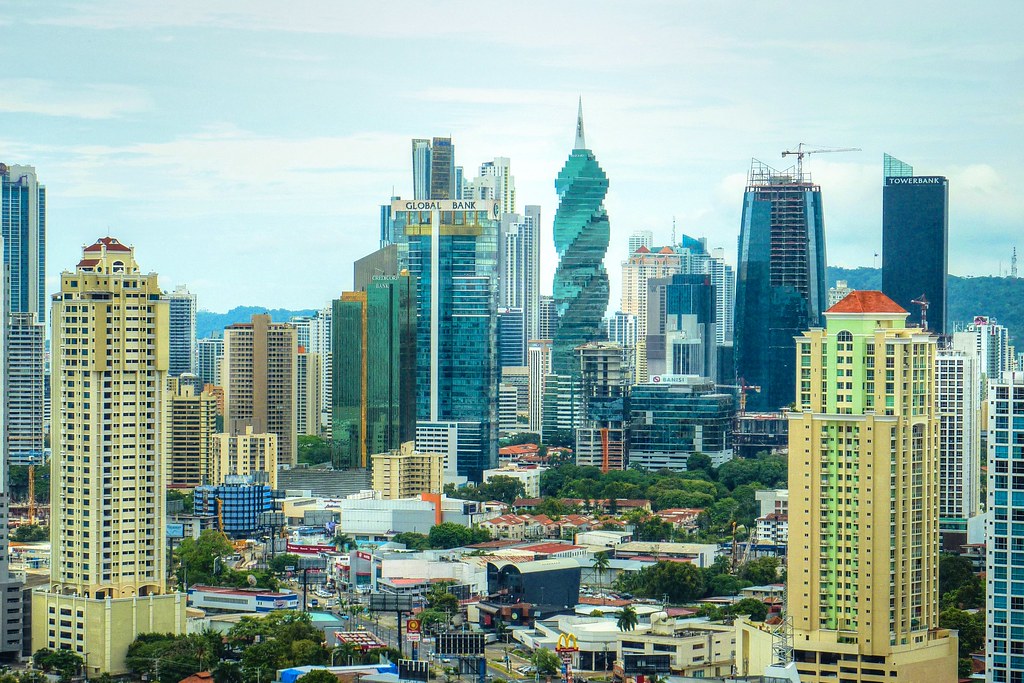 Panama City. Photo: Matthew Straubmuller / flickr, BY 2.0.
Panama City
A sharp contrast of old and new: the restored colonial streets of Casco Viejo sit a short taxi ride from the glass skyscraper skyline of the financial district.
 Boquete and the Chiriquí highlands. Photo: dalecruse / flickr, BY 2.0.
Boquete and the Chiriquí highlands
A cooler, mountain-town alternative to the coast, popular for coffee farm tours (this is where some of the world's priciest geisha coffee is grown), the Sendero Los Quetzales hiking trail and climbing Volcán Barú for sunrise views over both oceans on a clear day.
 Bocas del Toro. Photo: oenvoyage / flickr, BY-NC-SA 2.0.
Bocas del Toro
An archipelago of nine main islands off the Caribbean coast, with Bocas Town on Isla Colón as the social hub.
 San Blas (Guna Yala). Photo: Tanvir Rahat / wikimedia, BY-SA 4.0.
San Blas (Guna Yala)
A run of over 350 mostly uninhabited coral islands along the Caribbean coast, managed autonomously by the indigenous Guna people rather than the national government.
 Santa Catalina and Coiba. Photo: laszlo-photo / flickr, BY 2.0.
Santa Catalina and Coiba
A small surf town on the Pacific with a serious wave and easy access to Coiba National Park, a former penal colony turned marine reserve with some of the best diving in Central America.
To get a feel for Panama City specifically, a 'free walking tour' via Guruwalk is a solid, tip-based way to see Casco Viejo with some context. Our Outpacker chatbot is available to help you plan and build out your itinerary to make the most of your trip.
Getting around
Compare time, comfort and cost
Panama is compact enough that internal travel rarely eats too much of a trip, though there's no single neutral booking aggregator covering the whole country the way 12Go does in Southeast Asia – most routes get booked directly with individual bus, shuttle or ferry operators, or arranged through your hostel.
Taxi/Rideshare
Uber and inDriver both operate in Panama City and are the easiest way to avoid haggling over a fare.
Bus
Long-distance buses run from Panama City's Albrook terminal to most major towns, including Boquete and David, and are the cheapest way to cover distance.
Shuttle
Door-to-door tourist shuttles connect the main backpacker stops (Boquete, Bocas del Toro, Santa Catalina) directly, cutting out transfers at the cost of a higher fare than public buses – worth it on the longer, more awkward legs like Boquete to Bocas.
Plane
Air Panama and Copa Airlines run short domestic hops from Panama City to Bocas del Toro, David and other regional airports – useful for saving a travel day on the longer legs, and often not much pricier than the shuttle.
Download offline maps, keep key booking details available without data and avoid placing an international departure immediately after a fragile overland transfer.
Culture and events
Events worth knowing about
Panama's festival calendar runs around Carnival, plus a heavy run of national holidays in November.
A pre-Lent street festival, most famously celebrated in Las Tablas on the Azuero Peninsula, with parades, costumes, music and the "culecos" – trucks spraying crowds with water through the hottest part of the day.
independence from Colombia; 28 November – independence from Spain) – A cultural and patriotic festival stretch known locally as the "Mes de la Patria," with parades, marching bands and flag-waving across the country, Panama City and Los Santos Province in particular.
A religious festival best seen in La Villa de Los Santos, where "diablicos" (devil dancers) in elaborate masks perform in a symbolic battle of good against evil through the streets.
Confirm the official programme, accommodation pressure and transport changes before committing non-refundable plans.
Panamanian food
Discover the flavours that make Panama memorable
Panamanian food leans on plantain, rice, seafood and slow-cooked meats, and is generally good value outside of Panama City's more upscale spots.
-
 Sancochoa hearty chicken and root vegetable soup, often called the national dish.Photo: marc falardeau / flickr, BY 2.0
 -
 CevichePacific-caught, usually corvina, worth trying fresh at the Mercado de Mariscos in Panama City.Photo: krossbow / flickr, BY 2.0
 -
 Pataconestwice-fried plantain, served as a side with almost everything.Photo: brian.gratwicke / flickr, BY 2.0
 -
 Ropa Viejashredded beef in a tomato-based sauce, usually served over rice.Photo: Young in Panama / flickr, BY 2.0
 -
 Carimañolaa fried yuca roll stuffed with seasoned meat, a classic breakfast street snack.Photo: krossbow / flickr, BY 2.0
 -
 Arroz con guandúrice cooked with pigeon peas and coconut, a Caribbean-coast staple especially around Christmas.Photo: cookingdiva / flickr, BY-NC-ND 2.0
 -
 Hojaldrefried dough, eaten savoury or sweet, another common breakfast food.Photo: USAG Italy / flickr, BY-NC 2.0
 -
 Tres leches cakethe dessert that shows up on every menu, soaked in three kinds of milk.Photo: USAG Italy / flickr, BY-NC 2.0
Local markets and the fondas (small family-run canteens) found in most towns are the cheapest and most authentic way to eat well.
Visible turnover is a useful guide. Explain allergies carefully and carry a translated note when an ingredient could cause a serious reaction.
Hostels
Choose the atmosphere, not just the bed
Panama's hostel scene is real but concentrated in a handful of towns rather than spread evenly across the country – expect a much shorter list once you're outside Panama City, Boquete and Bocas del Toro.
Viajero Casco Viejo Hostel
Panama City, PanamaProperty image from Hostelworld's official HOSCAR record.View photos and details →Palmar Beach Lodge
Bocas del Toro, PanamaProperty image from Hostelworld's official HOSCAR record.View photos and details →Bambuda Lodge
Bocas del Toro, PanamaProperty image from Hostelworld's official HOSCAR record.View photos and details →El Machico Hostel
Panama City, PanamaProperty image from Hostelworld's official HOSCAR record.View photos and details →Bodhi Hostel & Lounge
El Valle de Anton, PanamaProperty image from Hostelworld's official HOSCAR record.View photos and details →What you need to pack
Pack for the route, not every possibility
The gear you need depends on the time of year and wider countries you plan to visit, so check out our trip planner for anything specific to your dates and countries – it'll build you a kit list based on exactly where and when you're going.
Climate and clothing
Heat, humidity and heavy rain are the two things you're packing around in Panama – even in the dry season, an afternoon downpour is never far off on the Caribbean side.
- A lightweight rain jacket or poncho – far more useful here than an umbrella, given how sudden and heavy the downpours can be.
- A universal travel adapter – Panama runs on Type A/B sockets at 120V, the same standard as the US.
- Run all of this through the trip planner to build your full kit based on your specific route and dates.
Rain and terrain
Boquete's highlands get noticeably cooler at night and on Volcán Barú's summit trail, so pack at least one warmer layer even if the rest of your kit is built for the coast.
- A dry bag – for boat transfers between islands in Bocas and San Blas, where getting wet on the crossing is normal, not an accident.
- A padlock – for hostel lockers, standard practice everywhere you'll be staying.
Hostels and travel days
Keep your bag light and your daily essentials easy to reach on moving days.
- Reef-safe sunscreen – San Blas and Bocas both have real coral reefs worth protecting, and some tour operators will ask for it specifically.
- A basic first aid kit – plasters, rehydration sachets and something for an upset stomach.
Activities and health
Add specialist equipment only for booked activities and current health guidance.
- DEET mosquito repellent – dengue and Zika are both present; take it seriously in Bocas, San Blas and the Darién region especially.
- A photocopy of your passport (and your entry stamp) – border officials and some hotels ask for ID, and it saves carrying the original everywhere.
Language
A few Spanish phrases go a long way
Spanish is the official language and the one worth learning key phrases in – English is fairly widely understood in Panama City and around the canal thanks to its history of US administration, and in parts of Bocas del Toro thanks to tourism, but you shouldn't count on it once you're off that trail.
| English | Say it in Spanish | Pronunciation |
|---|---|---|
| Hello | Hola | oh-lah |
| Goodbye | Adiós | ah-dee-ohs |
| Yes / No | Sí (see) / No | no |
| How much? | ¿Cuánto cuesta? | kwan-toh kwes-tah |
| How are you? | ¿Cómo estás? | koh-moh es-tahs |
| Please | Por favor | por fah-vor |
| Do you speak English? | ¿Hablas inglés? | ah-blahs een-glehs |
| Help, please | Ayuda, por favor | ah-yoo-dah por fah-vor |
| Where are you from? | ¿De dónde eres? | deh don-deh eh-res |
| What is your name? / My name is... | ¿Cómo te llamas? / Me llamo... | koh-moh teh yah-mahs / meh yah-moh |
| Thank you | Gracias | grah-syahs |
| Use the phrases respectfully: Panamanian Spanish moves fast and drops the ends of words more than the Spanish taught in most courses – don't be surprised if it takes a few days to tune your ear in, even with solid classroom Spanish behind you. | ||
Visa requirements
Check the rule for your passport
Entry rules depend on nationality, journey and length of stay. Confirm the current rule before booking, then check it again shortly before departure.
Check your exact requirements
Use Sherpa to review entry requirements for your passport and journey. Also confirm passport validity, permitted stay, proof of onward travel and any current arrival-form requirements.
Vaccinations
Make the advice fit your route
Vaccination and health advice depends on your route, duration, medical history and activities.
Review current CDC guidance
Read the current CDC Panama traveller guidance, then discuss personal recommendations with a qualified clinician.
Arrange appropriate travel insurance and keep policy details available offline. Consider the practical risks created by climate, altitude, insects, animals, water activities and road travel on your specific route.
Safety and common scams
Standard caution, specific habits
Panama is a manageable, well-travelled country for solo backpackers, and the well-worn Panama City–Boquete–Bocas loop sees a steady stream of independent travellers year-round.
ATM follow-and-rob
There have been cases of people being followed and robbed shortly after withdrawing cash. Use ATMs inside banks or shopping centres rather than standalone street machines, and don't count your cash in the open.
Overcharging taxis
Taxis outside Panama City are unmetered, and drivers will quote tourists more than locals if you let them. Agree the fare before you get in, or use Uber/inDriver where available.
Unlicensed San Blas tour operators
The islands are popular enough that informal, unregistered boat operators sometimes undercut licensed ones on price. Book through your hostel or a known operator rather than the first offer on the street in Panama City.
Pickpocketing on buses and at bus stations
Particularly around Albrook terminal and crowded city buses. Keep valuables zipped away and don't leave bags unattended.
Bag-watching favours from strangers
A common enough setup on beaches and at bus stations that it's worth being polite but firm about looking after your own things.
Panama City's outer neighbourhoods (San Miguelito, El Chorrillo and a handful of others) see higher crime rates than the tourist centre, and are generally not somewhere backpackers have a reason to wander into. The Darién Gap and the area near the Colombian border carry a markedly higher risk profile linked to cross-border criminal activity, and independent travel through it isn't realistic – if you're continuing to Colombia, the sailboat route via San Blas is the practical option, not the overland one. None of this should overshadow the trip for most travellers sticking to the main loop – just travel the way you would in any unfamiliar city, and you'll be fine.
Sources and feedback
Help us keep this guide useful
Travel information changes. Verify current entry, health, safety and transport guidance before booking or travelling.
If you spot anything that could be improved, corrected or updated, please use our contact page or email hello@outpacker.co.uk.
If any information is outdated or incorrect, Outpacker assumes no liability.