


Mexico
Ruins, coastlines and unforgettable food
Choose a region and travel it well, from highland cities and ancient sites to Caribbean water and Pacific surf towns.
The honest overview
Get to know Mexico before fixing the route.
Mexico is famed for its Mayan and Aztec ruins, world-class street food and a coastline that runs from Caribbean turquoise on one side to Pacific surf on the other, attracting backpackers, retirees and digital nomads alike from across the world. Mexico is known for being one of the easier entry points into Latin American travel, thanks to its long-established gringo trail, strong hostel network in the main tourist corridor and a visa-free stay that gives UK travellers plenty of room to move slowly, making it a reliable first stop before pushing on into Central America.
Part of the joy of backpacking in Mexico is deciding what deserves more time. Keep space for weather changes, longer travel days and recommendations from people you meet on the road.
Carry a mix of payment methods and keep emergency cash separate from your daily wallet.
There's no single fixed route through Mexico, and the country's size means most backpackers pick a region rather than trying to cover it all in one trip. That said, a well-worn loop runs from Mexico City down through Oaxaca and into Chiapas (San Cristóbal de las Casas, then on to Palenque), before heading east into the Yucatán for Mérida, Tulum and the Caribbean coast, often continuing on into Belize or Guatemala from there. Others fly straight into Cancún and stick to the Riviera Maya and Yucatán entirely, treating it as a shorter, beach-and-ruins trip. Baja California and the Pacific coast (Puerto Vallarta, Sayulita, Oaxaca's coast) form a separate, less-travelled route for those with more time or coming from the US side.
Season by season
What each season means for your trip
Mexico's weather can change sharply by region and elevation. These are planning patterns, not guarantees.
Drier travel window
The dry season and the best weather of the year, with warm days and cooler nights. Coastal areas sit around 27–30°C while Mexico City and the central highlands, at altitude, drop to a much brisker 18–22°C by day and can feel cold after dark – pack for both if you're moving between them.
Drier travel window
Hot and dry, building toward the year's warmest temperatures, especially inland. Mérida and the Yucatán can push past 35°C by May, and this is also the best window for whale shark encounters off the Baja peninsula.
Wetter travel conditions
The rainy season begins, bringing short, heavy afternoon downpours followed by clear evenings, with temperatures around 28–32°C on the coast. Humidity climbs noticeably in the Yucatán and Chiapas.
Seasonal conditions
Peak hurricane season on both the Caribbean and Pacific coasts, with September carrying the highest risk. Storms don't hit every year, but it's worth watching forecasts if you're on the coast during this window, and inland travel is largely unaffected.
Shoulder-season balance
The rains taper off and the dry season begins to settle in, making it a good shoulder-season month with fewer crowds than December's peak.
Check the forecast for the exact region and elevation on your route, then leave room to change outdoor plans when conditions move.
Cost of day to day travel
Build a budget around the route
Mexico runs cheaper than most people expect for a country this developed, with £20–25 a day covering a dorm bed, food from markets and street stalls, and local transport across most of the country.
Mexico runs cheaper than most people expect for a country this developed, with £20–25 a day covering a dorm bed, food from markets and street stalls, and local transport across most of the country.
Long transfers, specialist tours and headline activities can change the daily total quickly.
Transport, tours and peak-season accommodation deserve a separate buffer.
Average the full trip rather than forcing every day into the same number. Keep emergency funds separate from daily spending.
Key backpacker routes
Find the route that feels right for you
There is no single route you need to follow. Let your timeframe, interests and season shape the journey through Mexico.
Start with the natural route Core journey
There's no single fixed route through Mexico, and the country's size means most backpackers pick a region rather than trying to cover it all in one trip. That said, a well-worn loop runs from Mexico City down through Oaxaca and into Chiapas (San Cristóbal de las Casas, then on to Palenque), before heading east into the Yucatán for Mérida, Tulum and the Caribbean coast, often continuing on into Belize or Guatemala from there.
Add the region that earns your time Build depth
Others fly straight into Cancún and stick to the Riviera Maya and Yucatán entirely, treating it as a shorter, beach-and-ruins trip. Baja California and the Pacific coast (Puerto Vallarta, Sayulita, Oaxaca's coast) form a separate, less-travelled route for those with more time or coming from the US side.
Main destinations and attractions
Where to spend your days
Pick a connected group and leave room for hostel friendships and changing plans. Mexico rewards depth more than a checklist of stops.
 Mexico City. Photo: RussBowling / flickr, BY 2.0.
Mexico City
The capital and a real highlight in its own right, not just a transit hub. The historic centre (Zócalo, Palacio de Bellas Artes), the canals of Xochimilco, and the Frida Kahlo Museum in Coyoacán are the standard stops, alongside the National Museum of Anthropology.
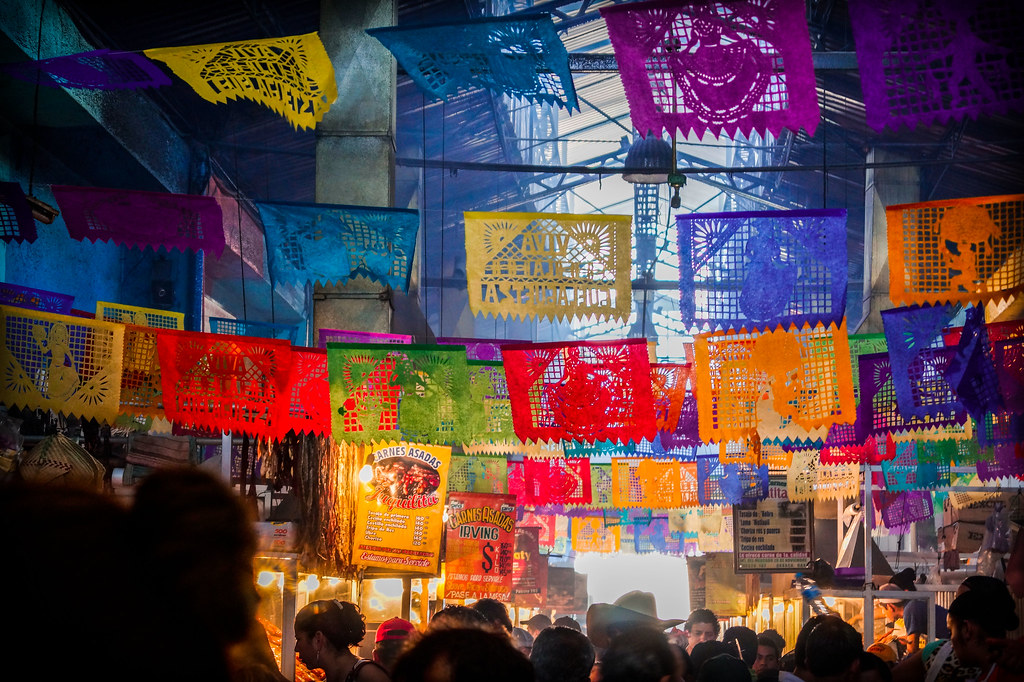 Oaxaca. Photo: giulian.frisoni / flickr, BY 2.0.
Oaxaca
Known for having Mexico's best food scene by a wide margin, plus a strong crafts and mezcal culture.
 San Cristóbal de las Casas and Chiapas. Photo: 16:9clue / flickr, BY 2.0.
San Cristóbal de las Casas and Chiapas
A cooler, highland base with a strong indigenous Maya presence in the surrounding villages. Palenque's jungle-set ruins are a few hours away, as are the Sumidero Canyon and Agua Azul waterfalls. Slower-paced than the coast, and popular with people wanting a break from the heat.
 Yucatán Peninsula (Mérida, Valladolid, Chichén Itzá). Photo: AlphaTangoBravo / Adam Baker / flickr, BY 2.0.
Yucatán Peninsula (Mérida, Valladolid, Chichén Itzá)
Mérida is the cultural base for the region, with Chichén Itzá the big-name ruin site nearby, though it's worth knowing it gets seriously crowded by mid-morning – an early start pays off.
 Tulum and the Riviera Maya. Photo: 16:9clue / flickr, BY 2.0.
Tulum and the Riviera Maya
Tulum's clifftop ruins and beach are striking, but the town itself has become one of the most expensive and heavily developed stops in the country, and budget travellers often find it doesn't match its backpacker reputation anymore.
 Baja California and the Pacific coast. Photo: NASA Goddard Photo and Video / nasa, BY 2.0.
Baja California and the Pacific coast
Less on the standard trail but growing in popularity: Puerto Vallarta and the surf town of Sayulita on the Pacific side, and whale shark tours and desert landscapes on the Baja peninsula.
Mexico is large enough that most trips pick a region rather than attempting the whole country – here's a breakdown by area: Regional safety note: Some northern border states and specific cities, including Tijuana and Tecate, carry a higher FCDO advisory tier, and Baja California Sur has seen isolated cartel-related incidents affecting public transport in Los Cabos, La Paz and Mulegé since April 2026 [Likely - based on the most recent update to FCDO guidance at time of writing, worth checking gov.uk directly for any changes before travel]. None of this affects the core backpacker route through Mexico City, Oaxaca, Chiapas or the Yucatán – see Safety and Common Scams for the full picture. To get a feel for the cities you are exploring, we'd highly recommend booking a 'free walking tour' via Guruwalk. You sign up for the tour and pay via a tip based system. Alternatively, many hostels offer a walking tour within their activities. Our Outpacker chatbot is available to help you plan and build out your itinerary to make the most of your trip.
Getting around
Compare time, comfort and cost
Compare journey time as well as price when moving through Mexico.
Mexico is a big country, and how you move depends heavily on the region
buses cover the country comprehensively and are the backbone of independent travel here.
Bus
ADO is the main long-distance operator across the south and Yucatán, running comfortable first-class coaches between major cities, while regional operators fill in elsewhere.
Taxi/Rideshare
Uber operates in most major cities and is generally the safer, more transparent option over hailing a taxi on the street, particularly at night or from an airport.
Plane
Domestic flights (Volaris, Viva Aerobus) are worth it for covering the country's real distances quickly – Mexico City to Cancún, for example, is a 24-hour bus ride versus a two-and-a-half-hour flight, and prices are often close.
Make sure you've got an eSIM or a data roaming contract set up, and download offline maps for each city before you arrive – signal can be patchy outside major towns.
Culture and events
Events worth knowing about
Dates can shift, so verify the current programme before building a trip around an event in Mexico.
A cultural festival with parades, costumes and street parties, most notably in Mazatlán and Veracruz, where the celebrations rival anything found in the Caribbean.
A religious festival marked by processions and reenactments across the country, with San Cristóbal de las Casas and Oaxaca holding some of the most elaborate versions.
A cultural festival held in Oaxaca celebrating the region's indigenous communities through traditional dance, music and costume from across the state's different ethnic groups, drawing visitors from across the country.
A remembrance festival where families build ofrendas (altars) for deceased relatives, decorated with marigolds, candles and photographs.
Confirm the official programme, accommodation pressure and transport changes before committing non-refundable plans.
Mexican food
Discover the flavours that make Mexico memorable
Mexico's food culture is one of the main reasons people come, and it's one of the best-value cuisines anywhere in the world.
-
 Tacos al pastormarinated pork off a spit, the dish Mexico City does best.Photo: Hagens_world / flickr, BY-NC-ND 2.0
 -
 Molea rich, complex sauce with dozens of regional variations, Oaxaca's is particularly famous.Photo: jay galvin / flickr, BY 2.0
 -
 Tlayudasan Oaxacan speciality, a large crisp tortilla topped like a flatbread pizza.Photo: urban_lenny / flickr, BY-NC 2.0
 -
 Cochinita pibilslow-roasted pork from the Yucatán, marinated in achiote and citrus.Photo: wallygrom / flickr, BY-SA 2.0
 -
 Elote/esquitesgrilled or boiled corn with mayo, cheese, chilli and lime, sold everywhere as a street snack.Photo: www.SamAntonioPhotography.com / flickr, BY-NC-ND 2.0
 -
 Chiles en nogadastuffed poblano peppers in a walnut cream sauce, a seasonal dish worth seeking out if you're there in late summer.Photo: madprime / flickr, BY-SA 2.0
 -
 Pozolea hearty hominy soup, usually pork or chicken, topped with radish, lettuce and lime.Photo: israelfotomx / flickr, BY-NC 2.0
 -
 Tamalessteamed corn dough parcels, sold from carts everywhere, especially first thing in the morning.Photo: CIMMYT / flickr, BY-NC-SA 2.0
Visible turnover is a useful guide. Explain allergies carefully and carry a translated note when an ingredient could cause a serious reaction.
Hostels
Choose the atmosphere, not just the bed
Mexico's hostel scene is strongest in Mexico City, Oaxaca and the Yucatán, and thinner and pricier in the most resort-driven parts of the Riviera Maya.
Bonita Escondida
Puerto Escondido, MexicoProperty image from Hostelworld's official HOSCAR record.View photos and details →Casa Angel Hostel
Oaxaca, MexicoProperty image from Hostelworld's official HOSCAR record.View photos and details →Viajero Puerto Escondido Hostel
Puerto Escondido, MexicoProperty image from Hostelworld's official HOSCAR record.View photos and details →Viajero Oaxaca Hostel
Oaxaca, MexicoProperty image from Hostelworld's official HOSCAR record.View photos and details →Viajero CDMX Centro Hostel
Mexico City, MexicoProperty image from Hostelworld's official HOSCAR record.View photos and details →Nomads Hotel Hostel & Rooftop Pool
Cancun, MexicoProperty image from Hostelworld's official HOSCAR record.View photos and details →Massiosare El Hostel
Mexico City, MexicoProperty image from Hostelworld's official HOSCAR record.View photos and details →Puerta Vieja Hostel
San Cristobal de las Casas, MexicoProperty image from Hostelworld's official HOSCAR record.View photos and details →Hostal Casa de Dante
Guanajuato, MexicoProperty image from Hostelworld's official HOSCAR record.View photos and details →What you need to pack
Pack for the route, not every possibility
The gear you need depends on the time of year and wider countries you plan to visit, so check out our trip planner for anything specific to your dates and countries – it'll build you a kit list based on exactly where and when you're going.
Climate and clothing
Mexico's main packing challenge is the swing between altitude and coast rather than heat alone – Mexico City and the central highlands sit high enough that evenings turn properly cold, even when the coast a few hours away is warm and humid.
- A packable insulated layer or fleece – for cold nights at altitude in Mexico City, Oaxaca and San Cristóbal.
- A padlock – for hostel lockers, standard across the country.
- Run all of this through the trip planner to build your full kit based on your specific route and dates.
Rain and terrain
Choose footwear and weather protection for the terrain and season on your route.
- Reef-safe sunscreen – several cenotes and marine parks require it and will turn you away without it.
- A basic first aid kit – plasters, rehydration sachets and something for an upset stomach, tap water isn't drinkable here.
Hostels and travel days
Hostels and local laundrettes both offer cheap, quick turnarounds in most towns, so you can pack light regardless of which fabric route you go with.
- DEET mosquito spray – dengue is present in parts of the country, particularly the coast and lowlands in rainy season.
- A reusable water bottle with a filter – cuts down on buying plastic bottles daily.
Activities and health
Add specialist equipment only for booked activities and current health guidance.
- A universal travel adapter – Mexico runs on Type A/B sockets at 127V, the same standard as the US and Canada.
- A dry bag – for cenote trips, boat crossings and the coast generally.
Language
A few Spanish phrases go a long way
Given the size and diversity of the country, Spanish is the language to focus on for a backpacking trip – it's the language you'll need almost everywhere on the standard route, including in areas with a strong indigenous presence, where Spanish still functions as the practical lingua franca for travellers.
| English | Say it in Spanish | Pronunciation |
|---|---|---|
| Hello | Hola | oh-lah |
| Goodbye | Adiós | ah-dee-ohs |
| Yes / No | Sí (see) / No | no |
| How much? | ¿Cuánto cuesta? | kwan-toh kwes-tah |
| How are you? | ¿Cómo estás? | koh-moh es-tahs |
| Please | Por favor | por fah-vor |
| Do you speak English? | ¿Hablas inglés? | ah-blahs een-glehs |
| Help, please | Ayuda, por favor | ah-yoo-dah por fah-vor |
| Where are you from? | ¿De dónde eres? | deh dohn-deh eh-rehs |
| What is your name? / My name is... | ¿Cómo te llamas? / Me llamo... | koh-moh teh yah-mahs / meh yah-moh |
| Thank you | Gracias | grah-syahs |
| Use the phrases respectfully: Mexican Spanish has its own slang and rhythm compared to Spain's – "¿Mande?" instead of "¿Qué?" when you don't catch something is a small but appreciated local habit to pick up. | ||
Visa requirements
Check the rule for your passport
Entry rules depend on nationality, journey and length of stay. Confirm the current rule before booking, then check it again shortly before departure.
Check your exact requirements
Use Sherpa to review entry requirements for your passport and journey. Also confirm passport validity, permitted stay, proof of onward travel and any current arrival-form requirements.
Vaccinations
Make the advice fit your route
Vaccination and health advice depends on your route, duration, medical history and activities.
Review current CDC guidance
Read the current CDC Mexico traveller guidance, then discuss personal recommendations with a qualified clinician.
Arrange appropriate travel insurance and keep policy details available offline. Consider the practical risks created by climate, altitude, insects, animals, water activities and road travel on your specific route.
Safety and common scams
Standard caution, specific habits
Mexico's main backpacker route, through Mexico City, Oaxaca, Chiapas and the Yucatán, is travelled by huge numbers of independent travellers every year without incident, and the day-to-day experience for most backpackers is closer to petty-crime caution than anything more serious.
Overcharging and "gringo tax"
Especially in markets and with unmetered taxis, prices quoted to obvious tourists can run well above the local rate. Agree a price before getting in a cab, or use Uber where it's available, and don't be afraid to politely negotiate at markets.
Bag and phone snatching
More common in crowded areas like markets, metro stations and busy squares than anywhere quiet. Keep bags zipped and in front of you, and don't have your phone out unnecessarily on the street.
Fake police or officials
Rare but reported, particularly asking for "fines" on the spot. Genuine police don't typically demand cash payments street-side – ask for ID and, if in doubt, suggest heading to the nearest station together.
ATM skimming
Use ATMs attached to banks rather than standalone street machines, and cover the keypad when entering your PIN.
Timeshare and resort touts
Particularly around Cancún and the Riviera Maya, high-pressure sales pitches for timeshares are common, often disguised as a free tour or gift offer. A firm no and walking on works fine.
That said, it's worth being upfront about the regional picture. The FCDO currently advises against all but essential travel to specific areas, most relevantly the city of Tijuana and parts of several northern border states (Sonora, Chihuahua, Coahuila, Nuevo León, Tamaulipas, Sinaloa and Durango) linked to drug-related organised crime – none of which sit on the standard backpacker route covered in this guide. Baja California Sur has also seen isolated incidents affecting public transport in Los Cabos, La Paz and Mulegé since April 2026 [Likely - check gov.uk/foreign-travel-advice/mexico directly for the current list of affected areas before travel, as this changes]. If your route touches any of these areas, check the FCDO page directly before you go. None of this should overshadow the trip – Mexico's backpacker route is well-established for a reason, and millions travel it safely every year. Just build in the same street-smart habits you'd use in any major city.
Sources and feedback
Help us keep this guide useful
Travel information changes. Verify current entry, health, safety and transport guidance before booking or travelling.
If you spot anything that could be improved, corrected or updated, please use our contact page or email hello@outpacker.co.uk.
If any information is outdated or incorrect, Outpacker assumes no liability.