


Italy
Cities, coastlines and regional flavour
Use the rail network to connect art-filled cities, mountain landscapes, coastlines and food traditions that change at every stop.
Dmitry Djouce / Wikimedia Commons, CC BY 4.0 · Image licence
The honest overview
Get to know Italy before fixing the route.
Italy is famed for its Renaissance art, coastal scenery and food culture that varies dramatically from region to region, attracting first-time Interrailers, food-focused travellers and history buffs alike from across the world. Italy is known for being one of Europe's most reliable backpacker legs, thanks to a dense rail network linking every major city, a hostel scene that's grown well beyond the old budget-hotel model, and a route that rewards even a short two-week loop, making it an easy country to build a wider Europe trip around.
Part of the joy of backpacking in Italy is deciding what deserves more time. Keep space for weather changes, longer travel days and recommendations from people you meet on the road.
Carry a mix of payment methods and keep emergency cash separate from your daily wallet.
There's no single fixed route through Italy, and plenty of backpackers end up adjusting plans once they fall in with people at a hostel. That said, a classic first loop runs Rome–Florence–Venice, sometimes extending north to Milan and the Lakes or south to Naples and the Amalfi Coast. Trains make cross-border connections easy too – Milan to Switzerland, Venice or Trieste towards Slovenia and Croatia, and overnight or ferry links from the south towards Greece are all well-used by people continuing a wider Europe trip.
Season by season
What each season means for your trip
Italy's weather can change sharply by region and elevation. These are planning patterns, not guarantees.
Cooler-season travel
Cold and often damp in the north, with temperatures of 2–9°C and snow in the Alps and Dolomites. The south (Sicily, Puglia, Naples) stays milder at 10–15°C. Venice sees acqua alta (seasonal flooding) most winters.
Wetter travel conditions
Mild and increasingly sunny with temperatures of 10–18°C, though rain is still frequent early on. Easter week brings major crowds to Rome and religious processions across the south.
Drier travel window
Warm and largely dry with temperatures of 18–27°C. Widely considered the best window for city-heavy itineraries, before the heat and crowds of high summer set in.
Wetter travel conditions
Very hot, especially inland and in the south, with temperatures of 28–35°C and little rain. Many Italians take their own holidays around Ferragosto (15 August), so smaller towns can feel emptier while the coast gets packed.
Shoulder-season balance
Warm and settled with temperatures of 18–26°C, one of the better shoulder windows along with late spring. Grape and olive harvests happen across Tuscany and Umbria.
Wetter travel conditions
Cool and wet with temperatures of 8–15°C, the quietest month for tourism outside the Alps. A reasonable time for city stops if you don't mind packing a rain layer.
Check the forecast for the exact region and elevation on your route, then leave room to change outdoor plans when conditions move.
Cost of day to day travel
Build a budget around the route
Italy runs noticeably higher than Southeast Asia or much of Eastern Europe. On the mainland, £50–65 a day covers a hostel dorm, food from markets and casual trattorias, and local transport. Venice, Cinque Terre and the Amalfi Coast push that closer to £55–70 a day, since accommodation is scarcer and demand is high even in shoulder season.
Italy runs noticeably higher than Southeast Asia or much of Eastern Europe. On the mainland, £50–65 a day covers a hostel dorm, food from markets and casual trattorias, and local transport.
Long transfers, specialist tours and headline activities can change the daily total quickly.
Transport, tours and peak-season accommodation deserve a separate buffer.
Average the full trip rather than forcing every day into the same number. Keep emergency funds separate from daily spending.
Key backpacker routes
Find the route that feels right for you
There is no single route you need to follow. Let your timeframe, interests and season shape the journey through Italy.
Start with the natural route Core journey
There's no single fixed route through Italy, and plenty of backpackers end up adjusting plans once they fall in with people at a hostel.
Add the region that earns your time Build depth
That said, a classic first loop runs Rome–Florence–Venice, sometimes extending north to Milan and the Lakes or south to Naples and the Amalfi Coast.
Keep the order flexible Adapt as you travel
Trains make cross-border connections easy too – Milan to Switzerland, Venice or Trieste towards Slovenia and Croatia, and overnight or ferry links from the south towards Greece are all well-used by people continuing a wider Europe trip.
Main destinations and attractions
Where to spend your days
Pick a connected group and leave room for hostel friendships and changing plans. Italy rewards depth more than a checklist of stops.
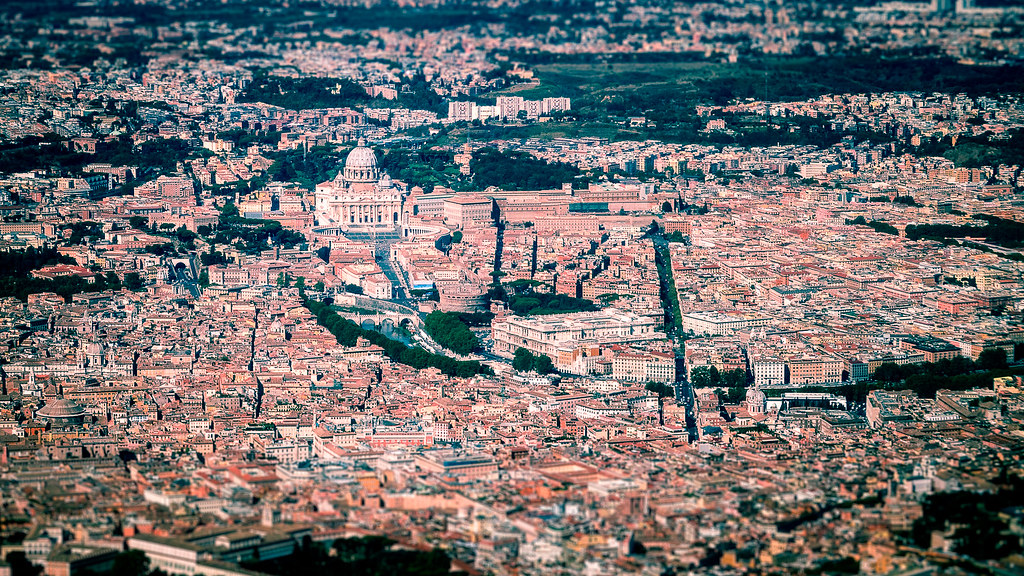 Rome. Photo: Giuseppe Milo (www.pixael.com) / flickr, BY 2.0.
Rome
The classic first stop for most backpackers. The Colosseum, Roman Forum and Vatican City (St Peter's Basilica and the Sistine Chapel) are the headline sights, and the Trastevere neighbourhood is worth an evening for food and a slower pace.
 Florence and Tuscany. Photo: Dan Cook Archived (dan-scape.co.uk) / flickr, BY-SA 2.0.
Florence and Tuscany
Florence's Duomo and the Uffizi Gallery anchor a compact, walkable old town, and it's an easy base for day trips into the Tuscan countryside (Siena, San Gimignano, the Chianti wine region).
 Venice. Photo: Giuseppe Milo (www.pixael.com) / flickr, BY 2.0.
Venice
Best known for its canals, St Mark's Square and the Rialto Bridge, with the outer islands of Murano and Burano worth a half-day for glassblowing and coloured houses respectively.
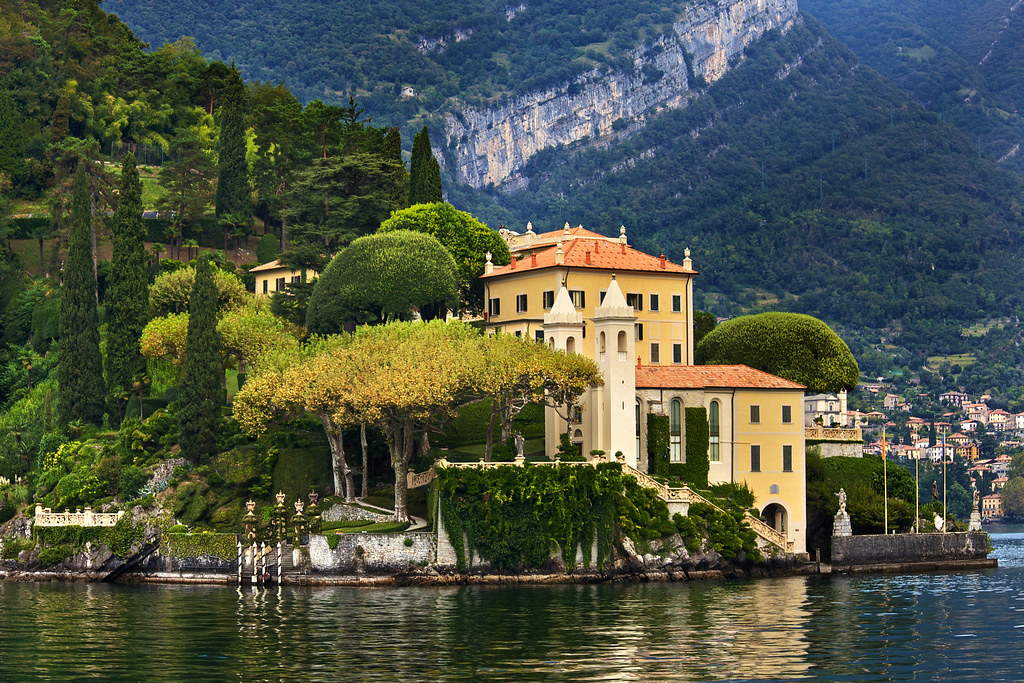 Milan and the Lakes. Photo: Daniel Peckham / flickr, BY-NC-SA 2.0.
Milan and the Lakes
Milan itself is more business city than backpacker hub, but the Duomo and Navigli canal district are worth a stopover, and it's the easiest jumping-off point for Lake Como and Lake Garda, both popular for a slower couple of days between the big cities.
 Cinque Terre and the Ligurian coast. Photo: WanderingtheWorld (www.ChrisFord.com) / flickr, BY-NC 2.0.
Cinque Terre and the Ligurian coast
Five cliffside villages connected by a coastal trail and a short train line, with Vernazza and Manarola the most photographed. Book accommodation early – the villages are tiny and fill up fast in summer.
 Naples and the Amalfi Coast. Photo: Trey Ratcliff / flickr, BY-NC-SA 2.0.
Naples and the Amalfi Coast
Naples has a rawer, more chaotic energy than the north and is the birthplace of pizza – worth a stop in its own right, not just a gateway to the coast.
Italy has enough regional variety that most first trips only scratch the surface. Here's a starting point by region: For a feel of any city before diving in, a 'free walking tour' booked via a tip-based platform like Guruwalk is worth the first morning. Our Outpacker chatbot can also help build out a route based on how much time you've got.
Getting around
Compare time, comfort and cost
Italy's rail network is extensive and reasonably priced, and it's the backbone of most backpacker routes here.
Train
High-speed Frecciarossa and Italo services connect Rome, Florence, Venice, Milan and Naples in a few hours each; regional trains are slower but cover smaller towns the high-speed lines skip.
Bus
FlixBus covers routes the train network doesn't, and is generally the cheapest option for cross-country hops, though journeys take longer and comfort is more basic.
Ferry
Essential for Sicily, Sardinia and the smaller islands (Capri, the Aeolian Islands) – schedules thin out and prices rise in winter, so check ahead outside peak season.
Metro/local transport
Rome, Milan and Naples all have metro systems; Venice runs on vaporetto (water bus) instead, which doubles as sightseeing.
Download offline maps, keep key booking details available without data and avoid placing an international departure immediately after a fragile overland transfer.
Culture and events
Events worth knowing about
Dates can shift, so verify the current programme before building a trip around an event in Italy.
A costume and mask festival filling Venice's squares and canals with elaborate historical dress for around two weeks before Lent, culminating in a grand masked ball.
A religious festival with processions across the country, most striking in southern towns and Rome, where Good Friday sees a torchlit procession at the Colosseum led by the Pope.
A bareback horse race around Siena's central square, contested between the city's historic districts and preceded by days of processions in medieval dress.
A national holiday marking the height of the Italian summer break, when much of the country closes down and heads to the coast or mountains.
A film festival on the Lido drawing major international premieres and red-carpet events. Most of it isn't open to the public, but the atmosphere spills into the wider city for the week.
Confirm the official programme, accommodation pressure and transport changes before committing non-refundable plans.
Italian food
Discover the flavours that make Italy memorable
Italian food changes meaningfully by region, so what you eat in Naples bears little resemblance to a meal in Bologna or Palermo.
-
 Pizza Napoletanathe original, best tried in Naples itself at somewhere like L'Antica Pizzeria da Michele.Photo: Nicola since 1972 / flickr, BY 2.0
 -
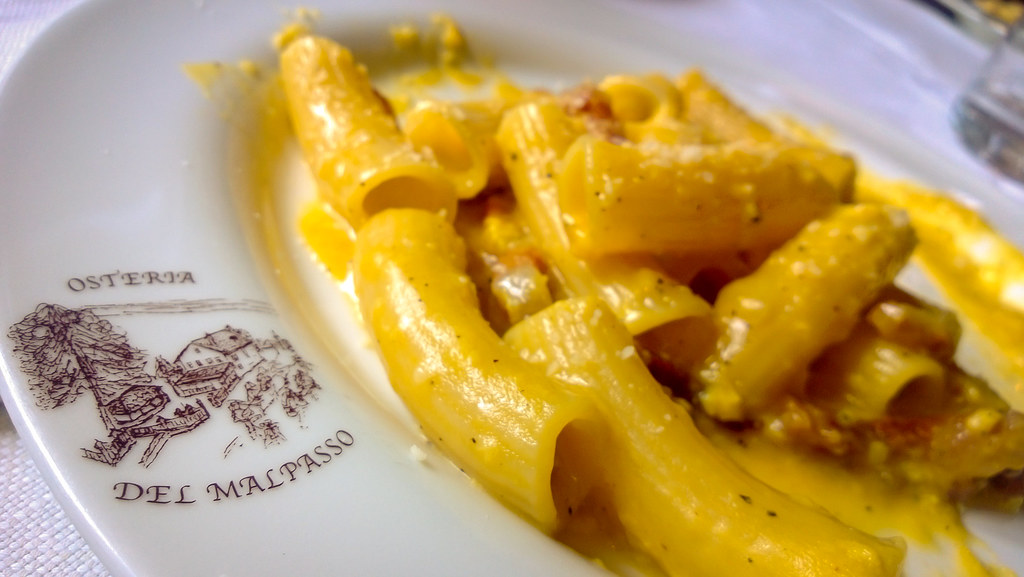 Cacio e pepe / CarbonaraRoman pasta classics built on just a handful of ingredients, done properly.Photo: Nicola since 1972 / flickr, BY 2.0
 -
 Ragù alla Bolognesethe real version, richer and less tomato-heavy than what most people know from abroad.Photo: shinnygogo / flickr, BY-NC-ND 2.0
 -
 AranciniSicilian stuffed, fried rice balls, sold everywhere as a street snack.Photo: Nicola since 1972 / flickr, BY 2.0
 -
 Gelatolook for muted, natural colours rather than the bright artificial-looking stuff, a decent sign it's made properly.Photo: Neil. Moralee / flickr, BY-NC-ND 2.0
 -
 Aperitivoan early-evening drink that comes with free snacks or a small buffet, especially common in Milan and the north.Photo: atelier-ying / flickr, BY-NC-ND 2.0
 -
 Espressodrunk standing at the bar in most of Italy, and noticeably cheaper that way than sitting at a table.Photo: Trishhhh / flickr, BY 2.0
 -
 Focacciaa Ligurian staple, best fresh from a bakery in Genoa or along the Cinque Terre coast.Photo: Nicola since 1972 / flickr, BY 2.0
Visible turnover is a useful guide. Explain allergies carefully and carry a translated note when an ingredient could cause a serious reaction.
Hostels
Choose the atmosphere, not just the bed
Italian hostels range from quiet, design-led properties to full-on social hubs, so it's worth deciding which you want before booking.
Hostel of the Sun
Naples, ItalyProperty image from Hostelworld's official HOSCAR record.View photos and details →YellowSquare Florence
Florence, ItalyProperty image from Hostelworld's official HOSCAR record.View photos and details →Anda Venice
Venice, ItalyProperty image from Hostelworld's official HOSCAR record.View photos and details →QUO Milano
Milan, ItalyProperty image from Hostelworld's official HOSCAR record.View photos and details →Hopestel Secret Garden
Naples, ItalyProperty image from Hostelworld's official HOSCAR record.View photos and details →YellowSquare Rome
Rome, ItalyProperty image from Hostelworld's official HOSCAR record.View photos and details →PLUS Florence
Florence, ItalyProperty image from Hostelworld's official HOSCAR record.View photos and details →What you need to pack
Pack for the route, not every possibility
Pack based on your specific dates and route through our trip planner – Italy spans enough climate range north to south that a June trip to the Alps and a June trip to Sicily need noticeably different kit.
Climate and clothing
The main challenge is less about extreme weather and more about layering and comfort: summer heat in the cities (especially inland Florence and Rome, where the heat holds between old stone buildings), cooler evenings even in high season, and a lot of walking on cobblestones and uneven ground.
- A lightweight scarf or shawl – useful for covering shoulders when visiting churches and the Vatican, which enforce dress codes strictly.
- Sunscreen and a hat – southern Italy and the islands get intense midday sun through summer.
Rain and terrain
Choose footwear and weather protection for the terrain and season on your route.
- A universal travel adapter – Italy runs on Type C/F/L sockets at 230V.
- A portable phone charger – useful for long train days and city sightseeing without a reliable charging point.
Hostels and travel days
Hostels and laundrettes are widely available in cities, though smaller towns can mean waiting a day or two between wash options.
- A crossbody bag with a zip – pickpocketing is a real risk in crowded tourist areas and on public transport, and a bag you can keep in front of you cuts your risk substantially.
- Run your dates through the trip planner for a full kit list tailored to your route.
Activities and health
Add specialist equipment only for booked activities and current health guidance.
- A reusable water bottle – many Italian towns have free public drinking fountains (nasoni in Rome), so refilling is easy and cuts down on buying bottled water.
Language
A few Italian phrases go a long way
Hello – Ciao (chow), or Buongiorno (bwon-jor-no) more formally
| English | Say it in Italian | Pronunciation |
|---|---|---|
| Hello | Ciao (chow), or Buongiorno (bwon-jor-no) more formally | As written |
| Goodbye | Arrivederci | ah-ree-veh-dair-chee |
| Yes / No | Sì (see) / No | no |
| How much? | Quanto costa? | kwan-to kos-ta |
| How are you? | Come stai? | koh-meh sty |
| Please | Per favore | pair fah-vor-eh |
| Do you speak English? | Parli inglese? | par-lee een-glay-zeh |
| Help, please | Aiuto, per favore | eye-oo-toh, pair fah-vor-eh |
| Where are you from? | Di dove sei? | dee doh-veh say |
| What is your name? / My name is... | Come ti chiami? / Mi chiamo... | koh-meh tee kee-ah-mee / mee kee-ah-mo |
| Thank you | Grazie | grah-tsyeh |
| Use the phrases respectfully: English is widely spoken in tourist areas and larger cities, but drops off noticeably in smaller towns and among older generations – a handful of Italian phrases go a long way outside the main hubs. | ||
Visa requirements
Check the rule for your passport
Entry rules depend on nationality, journey and length of stay. Confirm the current rule before booking, then check it again shortly before departure.
Check your exact requirements
Use Sherpa to review entry requirements for your passport and journey. Also confirm passport validity, permitted stay, proof of onward travel and any current arrival-form requirements.
Vaccinations
Make the advice fit your route
Vaccination and health advice depends on your route, duration, medical history and activities.
Review current CDC guidance
Read the current CDC Italy traveller guidance, then discuss personal recommendations with a qualified clinician.
Arrange appropriate travel insurance and keep policy details available offline. Consider the practical risks created by climate, altitude, insects, animals, water activities and road travel on your specific route.
Safety and common scams
Standard caution, specific habits
Italy is a safe country for solo travellers to explore, and violent crime against tourists is rare.
Pickpocketing
Common on crowded metro lines (especially Rome's Line A and B), at major sights and on busy regional trains. Keep bags zipped and in front of you, and be extra alert around anyone creating a distraction (spilled drink, sudden crowding, a map shoved in your face).
The "gladiator" photo scam
Costumed performers near the Colosseum and other major sights will pose for a photo, then demand a large tip afterwards. Agree a price or decline politely before any photo is taken.
Fake petition or bracelet scam
Someone approaches with a clipboard or a "free" bracelet, gets you to sign or accept it, then demands money or becomes aggressive about a donation. Keep walking and don't engage.
Restaurant bill padding
Watch for a coperto (cover charge) that isn't on the menu, or extra items added to a bill without ordering them – always check the total before paying, especially in heavily touristed areas.
Taxi overcharging
Particularly from airports (Fiumicino, Malpensa) – always confirm the meter is running, or agree a fixed fare upfront if one's posted.
Fake ticket sellers
Around the Colosseum, Vatican and other major sights, unofficial sellers offer "skip the line" tickets at inflated prices. Book directly through official sites in advance instead.
None of this should put you off – just keep your bag zipped and your wits about you in the busiest spots, and Italy is as straightforward as backpacking Europe gets.
Sources and feedback
Help us keep this guide useful
Travel information changes. Verify current entry, health, safety and transport guidance before booking or travelling.
If you spot anything that could be improved, corrected or updated, please use our contact page or email hello@outpacker.co.uk.
If any information is outdated or incorrect, Outpacker assumes no liability.