


Honduras
Reef dives and Maya ruins
Build a focused route around the Bay Islands and Copan, with realistic transfers and current safety advice shaping the journey.
Georg Karl Ell / Wikimedia Commons, CC BY-SA 4.0 · Image licence
The honest overview
Get to know Honduras before fixing the route.
Honduras is famed for the Mesoamerican Reef's dive sites off the Bay Islands, the Mayan ruins at Copán and a Caribbean coastline that's largely skipped the crowds piling into Belize and Mexico, attracting divers, ruin-hunters and Central America overlanders willing to look past its reputation. Honduras is known for being the country most backpackers cross rather than linger in, thanks to an elevated crime rate outside its two main draws, sparse hostel coverage on the mainland and a UK government advisory that calls for more caution than its Central American neighbours, making it a country best tackled with a tighter, better-planned route than Guatemala or Nicaragua next door.
Part of the joy of backpacking in Honduras is deciding what deserves more time. Keep space for weather changes, longer travel days and recommendations from people you meet on the road.
US dollars are widely accepted alongside lempiras, but pounds sterling are hard to exchange – bring a card for ATM withdrawals and keep some cash on you, since card acceptance thins out fast once you're off the islands.
There's no single fixed route through Honduras – most people either enter overland from Guatemala heading for Copán, or fly straight into the Bay Islands and treat the rest of the country as optional. It's worth having a tighter plan here than elsewhere in Central America, since the usual hostel-to-hostel drift works less well where hostels themselves are thin on the ground. The classic loop runs Copán Ruinas in the west, down to La Ceiba on the north coast as a transit hub, then a ferry out to Utila or Roatán for diving. Some continue on to Nicaragua via the CA-4 border zone, though FCDO guidance means most backpackers treat Honduras as a shorter stop than Guatemala or Costa Rica either side of it.
Season by season
What each season means for your trip
Honduras's weather can change sharply by region and elevation. These are planning patterns, not guarantees.
Drier travel window
The dry season across most of the country, with daytime highs of 28–34°C on the coast and cooler 22–28°C in highland towns like Copán and Gracias. The most reliable window for both the Bay Islands and inland travel, though the Caribbean coast can still catch the odd shower.
Wetter travel conditions
The hinge month. Dry season conditions largely hold on the islands and inland, with the first rains of the wet season arriving on the mainland by late May. Whale sharks start showing up off Utila and Roatán, running through September.
Wetter travel conditions
Wet season proper, with intense afternoon downpours most days and temperatures around 30–34°C. Mornings are usually clear, so it isn't a write-off, but overland travel gets slower and ferry cancellations more common.
Wetter travel conditions
The wettest stretch and peak hurricane season, running officially May to November but concentrated here. Heavy rain, flooding risk on some inland roads and the highest chance of a hurricane-related disruption to travel plans.
Check the forecast for the exact region and elevation on your route, then leave room to change outdoor plans when conditions move.
Cost of day to day travel
Build a budget around the route
Honduras is one of the cheaper countries left in Central America. On the mainland, £20–25 a day covers a hostel dorm, local food and buses comfortably. The Bay Islands push that to £30–40 a day, mostly down to diving costs and the mark-up on anything shipped over from the mainland – though Utila keeps PADI courses some of the cheapest in the world, which offsets the higher daily spend if that's what you're there for.
Honduras is one of the cheaper countries left in Central America. On the mainland, £20–25 a day covers a hostel dorm, local food and buses comfortably. The Bay Islands push that to £30–40 a day, mostly down to diving costs and the mark-up on anything shipped over from the mainland – though Utila keeps PADI courses some of the cheapest in the world, which offsets the higher daily spend if that's what you're there for.
Long transfers, specialist tours and headline activities can change the daily total quickly.
US dollars are widely accepted alongside lempiras, but pounds sterling are hard to exchange – bring a card for ATM withdrawals and keep some cash on you, since card acceptance thins out fast once you're off the islands.
Average the full trip rather than forcing every day into the same number. Keep emergency funds separate from daily spending.
Key backpacker routes
Find the route that feels right for you
There is no single route you need to follow. Let your timeframe, interests and season shape the journey through Honduras.
Start with the natural route Core journey
There's no single fixed route through Honduras – most people either enter overland from Guatemala heading for Copán, or fly straight into the Bay Islands and treat the rest of the country as optional. It's worth having a tighter plan here than elsewhere in Central America, since the usual hostel-to-hostel drift works less well where hostels themselves are thin on the ground.
Add the region that earns your time Build depth
The classic loop runs Copán Ruinas in the west, down to La Ceiba on the north coast as a transit hub, then a ferry out to Utila or Roatán for diving. Some continue on to Nicaragua via the CA-4 border zone, though FCDO guidance means most backpackers treat Honduras as a shorter stop than Guatemala or Costa Rica either side of it.
Main destinations and attractions
Where to spend your days
Pick a connected group and leave room for hostel friendships and changing plans. Honduras rewards depth more than a checklist of stops.
 Copán Ruinas. Photo: toomuchkatherine / flickr, BY-NC-SA 2.0.
Copán Ruinas
A small, walkable colonial town built around the Copán archaeological site, a UNESCO World Heritage Mayan ruin known for having the finest collection of carved hieroglyphic stairways in the Maya world.
 Utila. Photo: Thomas Frost Jensen / flickr, BY 2.0.
Utila
The main backpacker island and one of the cheapest places on earth to get PADI certified, thanks to fierce competition between dive shops.
 Roatán. Photo: Michel Curi / flickr, BY 2.0.
Roatán
Larger, more developed and pricier than Utila, with West End and West Bay as the main hubs for beaches, dive shops and a more polished nightlife scene.
 La Ceiba. Photo: madmack66 / flickr, BY 2.0.
La Ceiba
More transport hub than destination in its own right, but the jumping-off point for ferries to Utila and Roatán and for trips into Pico Bonito National Park, which offers proper rainforest hiking, white-water rafting and canopy tours a world away from the coast.
 Tegucigalpa. Photo: Fellowship of the Rich / flickr, BY-NC-ND 2.0.
Tegucigalpa
The capital sees relatively few backpackers passing through given the safety advice around walking its streets, but it's occasionally an unavoidable transit point for domestic flights or onward buses.
 Lago de Yojoa. Photo: Ben Beiske / flickr, BY-NC-SA 2.0.
Lago de Yojoa
Honduras's largest lake, ringed by coffee farms and cloud forest, and a quiet stop for hiking or birdwatching if you're overlanding between Copán and the coast rather than flying between the two.
Honduras rewards a focused trip more than a wandering one – here's where that focus is best spent: To get a feel for Copán Ruinas or any of the towns you pass through, a Guruwalk-style tip-based walking tour is worth checking for, though coverage is patchier here than in more heavily backpacked countries. Our Outpacker chatbot is available to help you plan and build out your itinerary to make the most of your trip.
Getting around
Compare time, comfort and cost
Honduras doesn't have a single dominant booking platform the way Thailand has 12Go, so most transport is booked in person or through hostels rather than online.
Bus
Direct or "ejecutivo" buses connect the main cities and are the standard way to cover distance cheaply, though FCDO advice specifically flags violent attacks on vehicles on some routes, so stick to daytime travel on major roads between well-established stops.
Ferry
The main route to the Bay Islands, running from La Ceiba to Utila and Roatán multiple times daily.
Plane
Domestic flights connect Tegucigalpa, San Pedro Sula, La Ceiba and the Bay Islands, and are worth the extra cost over an overland route on safety grounds alone for some legs, particularly anything routing through or near Tegucigalpa.
Taxi
Radio-dispatched or hotel-arranged taxis are the safer option over hailing one on the street, particularly from airports and bus stations.
Download offline maps, keep key booking details available without data and avoid placing an international departure immediately after a fragile overland transfer.
Culture and events
Events worth knowing about
Honduras's festival calendar leans on Garifuna and Catholic traditions, with a couple of dates worth timing a trip around.
A religious festival with processions, elaborate sawdust carpets (alfombras) laid through the streets of colonial towns, and a national week-long break that sees Hondurans travel in large numbers, pushing up transport and accommodation demand everywhere.
A cultural festival celebrating the Garifuna community who settled on Roatán in 1797, with traditional punta dance, drumming and food marking their arrival on the island.
A city-wide cultural festival with parades, live music and food stalls, the country's biggest annual fair and a proper look at Honduran celebration outside the tourist circuit.
A cultural and religious festival marking Garifuna heritage along the north coast, with drumming, dance and traditional food, most visible in Trujillo and the Bay Islands.
Confirm the official programme, accommodation pressure and transport changes before committing non-refundable plans.
Honduran food
Discover the flavours that make Honduras memorable
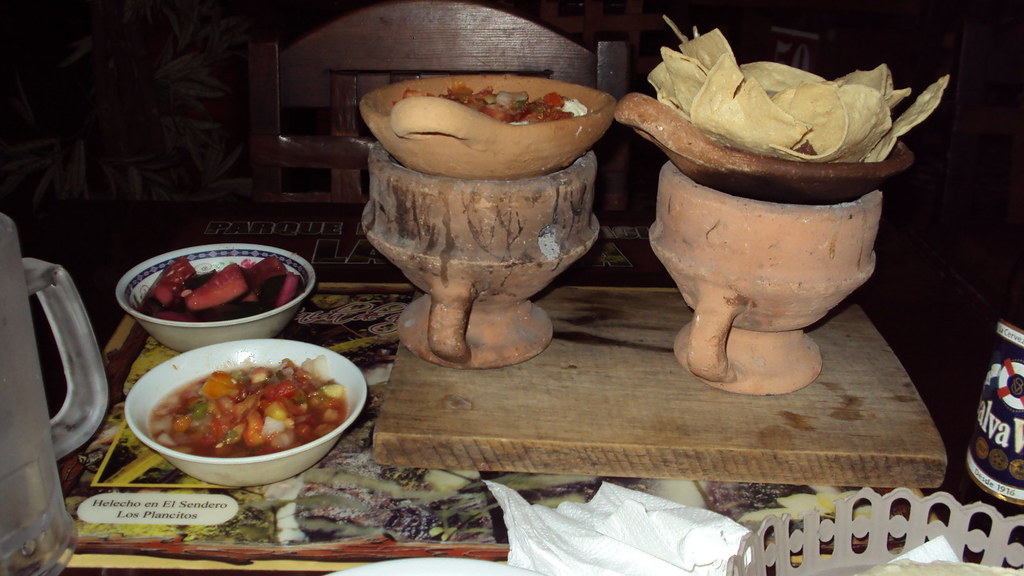
Honduran food doesn't get the international attention Mexican or Peruvian cooking does, but it's cheap, filling and worth seeking out beyond the tourist-facing seafood platters on the islands.
-
 Baleadathe everyday staple, a folded flour tortilla with refried beans, cheese and crema, sold everywhere from street carts to sit-down comedores.Photo: grizzlymountainarts / flickr, BY 2.0
 -
 Sopa de caracolconch soup, a Caribbean-coast speciality especially popular in the Bay Islands.Photo: USAID_IMAGES / flickr, BY-NC-ND 2.0
 -
 Tajadasfried plantain slices, usually served alongside grilled meat or as a snack on their own.Photo: Abouid / flickr, BY 2.0
 -
 Pollo con tajadasfried chicken with plantain crisps, cabbage slaw and a vinegar-based sauce, a classic lunch plate.Photo: leivajd / flickr, BY 2.0
 -
 Yuca fritafried cassava, another common side, best with a squeeze of lime.Photo: MjZ Photography / flickr, BY-NC 2.0
 -
 Catracho breakfasteggs, beans, plantain, cheese and tortillas, the standard way to start the day.Photo: JPMoUr / flickr, BY 2.0
 -
 Pan de cocococonut bread, a Garifuna staple found along the north coast and islands.Photo: intimaralem85 / flickr, BY 2.0
 -
 Local comedores and market stalls are the best way to eat well and cheaplyon the islands, look for the Garifuna-run seafood spots away from the main strip for better value than the beachfront restaurants.Photo: KkleinRN / flickr, BY 2.0
Visible turnover is a useful guide. Explain allergies carefully and carry a translated note when an ingredient could cause a serious reaction.
Hostels
Choose the atmosphere, not just the bed
Hostel coverage in Honduras is concentrated almost entirely in Copán Ruinas and the Bay Islands – across the rest of the country, budget guesthouses and small hotels fill the gap rather than dorm-style hostels.
Onat Hostel
Roatan, HondurasProperty image from Hostelworld's official HOSCAR record.View photos and details →Iguana Azul
Copan Ruinas, HondurasProperty image from Hostelworld's official HOSCAR record.View photos and details →Roatan Backpackers' Hostel
Roatan, HondurasProperty image from Hostelworld's official HOSCAR record.View photos and details →Hotel & Hostel Guacamayos Back Packer
La Ceiba, HondurasProperty image from Hostelworld's official HOSCAR record.View photos and details →What you need to pack
Pack for the route, not every possibility
The gear you need depends on the time of year and wider countries you plan to visit, so check out our trip planner for anything specific to your dates and route – it'll build you a kit list based on exactly where and when you're going.
Climate and clothing
The main challenge here is heat and humidity on the coast and islands, paired with a real drop in temperature come evening in highland towns like Copán and Gracias.
- A dry bag – essential for the ferry crossings to the Bay Islands and any rafting on the Pico Bonito rivers.
- A universal travel adapter – Honduras runs on Type A/B sockets at 110V.
Rain and terrain
Pack a light long-sleeve layer or a fleece for highland evenings, since the temperature drop from Copán's daytime heat to its night-time chill catches people out.
- 50% DEET mosquito spray – dengue and Zika are both present, and this is non-negotiable for the coast and lowlands.
- A basic first aid kit – rehydration sachets and something for stomach upsets are worth having given the tap water situation.
Hostels and travel days
Keep your bag light and your daily essentials easy to reach on moving days.
- A copy of your passport photo and visa page – FCDO advice recommends carrying a copy rather than the original day-to-day.
- A reusable water bottle with a filter – tap water isn't safe to drink; bottled water is cheap and widely available as a backup.
Activities and health
Add specialist equipment only for booked activities and current health guidance.
- A padlock – for hostel lockers, which aren't universal outside the main backpacker spots.
- Run all of this through the trip planner to build your full kit based on your specific route and dates.
Language
A few Spanish phrases go a long way
Spanish is the official language and the only one you'll need on the mainland and most of Copán.
| English | Say it in Spanish | Pronunciation |
|---|---|---|
| Hello | Hola | oh-lah |
| Goodbye | Adiós | ah-dee-ohs |
| Yes / No | Sí (see) / No | noh |
| How much? | ¿Cuánto cuesta? | kwan-toh kwes-tah |
| How are you? | ¿Cómo estás? | koh-moh es-tahs |
| Please | Por favor | pohr fah-vor |
| Do you speak English? | ¿Hablas inglés? | ah-blahs een-glehs |
| Help, please | Ayuda, por favor | ah-yoo-dah pohr fah-vor |
| Where are you from? | ¿De dónde eres? | deh dohn-deh eh-rehs |
| What is your name? / My name is... | ¿Cómo te llamas? / Me llamo... | koh-moh teh yah-mahs / meh yah-moh |
| Thank you | Gracias | grah-syahs |
| Use the phrases respectfully: Local usage varies by region. A respectful attempt is usually appreciated, and a translation app is useful for complex questions. | ||
Visa requirements
Check the rule for your passport
Entry rules depend on nationality, journey and length of stay. Confirm the current rule before booking, then check it again shortly before departure.
Check your exact requirements
Use Sherpa to review entry requirements for your passport and journey. Also confirm passport validity, permitted stay, proof of onward travel and any current arrival-form requirements.
Vaccinations
Make the advice fit your route
Vaccination and health advice depends on your route, duration, medical history and activities.
Review current CDC guidance
Read the current CDC Honduras traveller guidance, then discuss personal recommendations with a qualified clinician.
Arrange appropriate travel insurance and keep policy details available offline. Consider the practical risks created by climate, altitude, insects, animals, water activities and road travel on your specific route.
Safety and common scams
Standard caution, specific habits
Honduras has one of the highest violent crime rates in Latin America, and the current FCDO advice reflects that with a heavier set of precautions than most Central American neighbours – though most of what serious crime affects doesn't target tourists directly, and the Bay Islands specifically carry a lower risk profile than the mainland.
Vehicle attacks on named routes
FCDO advice flags specific roads with a history of attacks on vehicles, including routes around Olancho, Santa Bárbara and the area around Tela, La Ceiba, Trujillo and El Progreso. Avoid road travel after dark, stick to main roads between major towns, and use a reputable operator for longer journeys rather than public buses where possible.
Petty theft in tourist areas
Common in cities and even on the Bay Islands, particularly at bus stations, airports and isolated beaches. Keep valuables locked away and don't display phones, cameras or jewellery openly.
ATM tampering
Withdraw from ATMs inside shopping centres or banks rather than standalone street machines, avoid large withdrawals or night-time use, and check for signs of tampering before inserting your card.
"White car" taxi risk
Unmarked taxis are specifically flagged in official advice; stick to radio-dispatched or hotel-arranged taxis instead, especially from airports.
Wire transfer scams
Scammers impersonate travellers in Honduras to ask friends and family back home for emergency money transfers. Warn people before you go that any such request should be verified with you directly first.
None of this should rule Honduras out if the ruins and the reef are what you're after – it just means planning a tighter route, sticking to known transport and towns, and treating the mainland with more caution than the islands.
Sources and feedback
Help us keep this guide useful
Travel information changes. Verify current entry, health, safety and transport guidance before booking or travelling.
If you spot anything that could be improved, corrected or updated, please use our contact page or email hello@outpacker.co.uk.
If any information is outdated or incorrect, Outpacker assumes no liability.