


Bolivia
High-altitude adventures
Climb into the Altiplano for salt flats, colourful markets, Andean cities and routes that reward a slower approach.
Diego Delso / Wikimedia Commons, CC BY-SA 4.0 · Image licence
The honest overview
Get to know Bolivia before fixing the route.
Bolivia is famed for the otherworldly Uyuni salt flats, the high-altitude sprawl of La Paz and some of the most dramatic Andean scenery on the continent, attracting trekkers, photographers and overlanders alike from across the world. Bolivia is known for being the roughest, cheapest and highest-altitude leg of the classic South America route, thanks to a lack of over-tourism, prices that undercut Peru and Chile at almost every turn, and a transport network that still runs on grit rather than glamour, making it the stretch of the trip where your budget goes furthest and your plans need to stay loosest.
Part of the joy of backpacking in Bolivia is deciding what deserves more time. Keep space for weather changes, longer travel days and recommendations from people you meet on the road.
The multi-day salt flats jeep tour is the one big-ticket cost worth budgeting separately from your daily spend – a three-day trip with food, transport and a driver-guide included typically runs £150–220 depending on operator and group size.
There isn't a single fixed route through Bolivia, and it does help to stay flexible – roads, buses and even border crossings here are more prone to disruption than most of the continent, so plans that bend easily serve you better than a tight itinerary. Most backpackers arrive overland from Peru, either via the Lake Titicaca crossing at Copacabana or direct to La Paz, then work south through Uyuni, Potosí and Sucre before crossing into Chile via San Pedro de Atacama or continuing into northern Argentina. Some loop east towards Cochabamba and Santa Cruz, or detour into the Amazon via Rurrenabaque, before heading back to the main southbound line.
Season by season
What each season means for your trip
Bolivia's weather can change sharply by region and elevation. These are planning patterns, not guarantees.
Dry season
Bolivia's most reliable stretch of weather and the best time to be here for clear Altiplano skies. La Paz and Uyuni sit around 15–20°C by day but drop close to freezing or well below after dark, especially in June and July, when nights on the salt flats can fall past -10°C. The Amazon lowlands around Rurrenabaque stay warm and considerably drier, making this the best window for jungle trips too.
Wetter travel conditions
The rains start building. Days on the Altiplano warm slightly into the high teens, and the salt flats begin taking on the first puddles that create the earliest mirror effect. Afternoon storms become more frequent but rarely last all day.
Wetter travel conditions
The wettest months, particularly in the lowlands and the Yungas, where roads can wash out and some high-pass treks close entirely. This is also peak season for Salar de Uyuni's famous mirror effect, when a thin layer of water turns the flats into a reflection of the sky – the trade-off is that some driving routes across the salt become impassable. Carnival season (Oruro, February or March, date shifts) brings the year's biggest crowds and highest prices.
Shoulder-season balance
A short shoulder month as the rains ease off. The salt flats are still drying out and the mirror effect can linger into early April, while the rest of the country swings back towards dry-season conditions.
Check the forecast for the exact region and elevation on your route, then leave room to change outdoor plans when conditions move.
Cost of day to day travel
Build a budget around the route
Bolivia is one of the cheapest countries on the South America backpacker circuit. In La Paz, Sucre, Cochabamba and Copacabana, £20–30 a day covers a hostel dorm, local almuerzo lunches, street food and public transport comfortably.
Bolivia is one of the cheapest countries on the South America backpacker circuit. In La Paz, Sucre, Cochabamba and Copacabana, £20–30 a day covers a hostel dorm, local almuerzo lunches, street food and public transport comfortably.
Long transfers, specialist tours and headline activities can change the daily total quickly.
The multi-day salt flats jeep tour is the one big-ticket cost worth budgeting separately from your daily spend – a three-day trip with food, transport and a driver-guide included typically runs £150–220 depending on operator and group size.
Average the full trip rather than forcing every day into the same number. Keep emergency funds separate from daily spending.
Key backpacker routes
Find the route that feels right for you
There is no single route you need to follow. Let your timeframe, interests and season shape the journey through Bolivia.
Start with the natural route Core journey
There isn't a single fixed route through Bolivia, and it does help to stay flexible – roads, buses and even border crossings here are more prone to disruption than most of the continent, so plans that bend easily serve you better than a tight itinerary. Most backpackers arrive overland from Peru, either via the Lake Titicaca crossing at Copacabana or direct to La Paz, then work south through Uyuni, Potosí and Sucre before crossing into Chile via San Pedro de Atacama or continuing into northern Argentina.
Add the region that earns your time Build depth
Some loop east towards Cochabamba and Santa Cruz, or detour into the Amazon via Rurrenabaque, before heading back to the main southbound line. If your route takes you through Cochabamba department, be aware that the FCDO advises against all but essential travel to the Chapare region specifically, including Villa Tunari and the highway routes that pass through it – most backpacker routes don't go near it, but it's worth checking your road doesn't clip it if you're travelling independently by bus.
Main destinations and attractions
Where to spend your days
Pick a connected group and leave room for hostel friendships and changing plans. Bolivia rewards depth more than a checklist of stops.
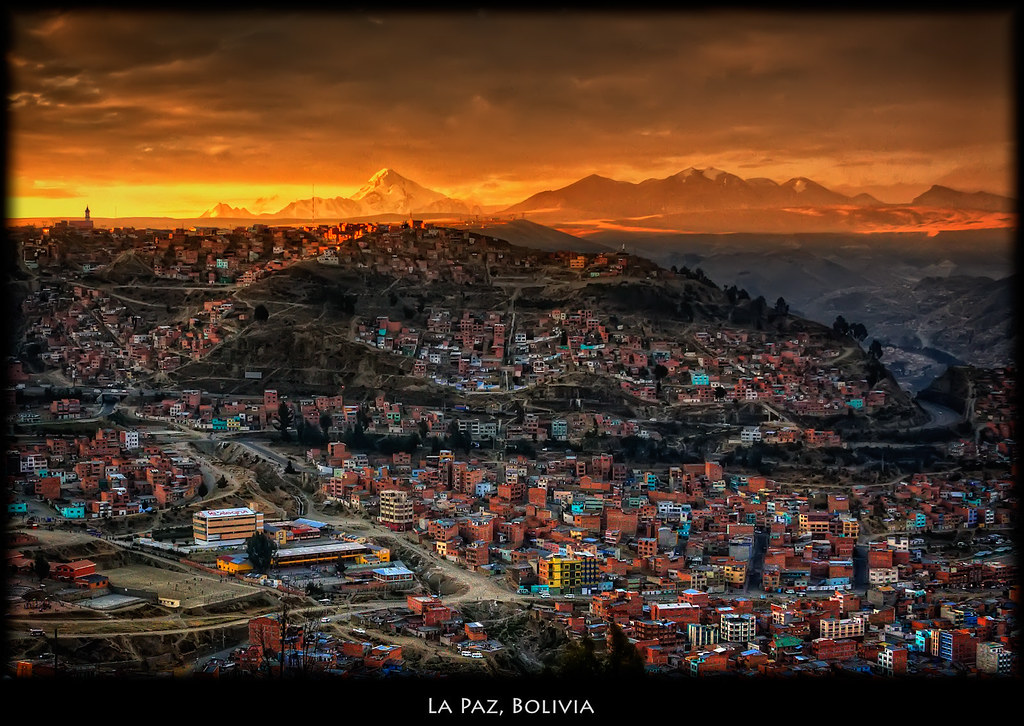 La Paz. Photo: szeke / flickr, BY-NC-SA 2.0.
La Paz
The world's highest administrative capital, sprawling up the sides of a canyon at over 3,600m. The cable car network (Mi Teleférico) is the best way to get a sense of the city's scale and is worth riding for its own sake, not just as transport.
 Uyuni and the Salar de Uyuni. Photo: wallygrom / flickr, BY-SA 2.0.
Uyuni and the Salar de Uyuni
The world's largest salt flat and the reason most people come to Bolivia at all. Multi-day jeep tours run from Uyuni town across the flats to the coloured lagoons and geysers near the Chilean border, often continuing straight through to San Pedro de Atacama rather than looping back.
 Sucre. Photo: Padmanaba01 / flickr, BY-SA 2.0.
Sucre
Bolivia's constitutional capital and a relaxed stop after the altitude of La Paz, with whitewashed colonial architecture and a noticeably milder climate.
 Potosí. Photo: Dimitry B / flickr, BY 2.0.
Potosí
Once one of the richest cities in the world off the back of silver mining, and still home to the Cerro Rico mine that funded it.
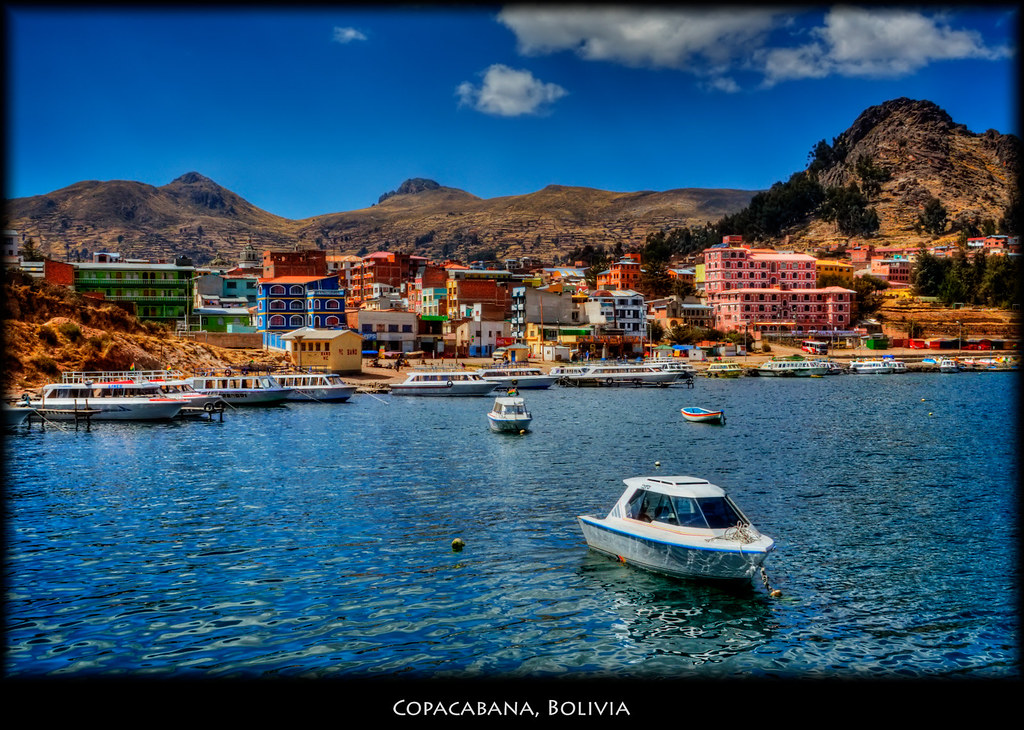 Copacabana and Lake Titicaca. Photo: szeke / flickr, BY-NC-SA 2.0.
Copacabana and Lake Titicaca
The main jumping-off point for Isla del Sol, considered the mythological birthplace of the sun in Inca tradition.
 Rurrenabaque and the Amazon. Photo: Phillie Casablanca / flickr, BY 2.0.
Rurrenabaque and the Amazon
The gateway to Madidi National Park and the Bolivian pampas, reachable by a short flight from La Paz or a very long bus ride.
Bolivia rewards slow, flexible travel more than a tick-list approach, but here are the essentials by region: Free walking tours run in La Paz and Sucre on a tip-based system and are a solid way to get oriented in your first day. Our Outpacker chatbot can help you build the rest of your route around whichever of these you prioritise.
Getting around
Compare time, comfort and cost
Long-distance buses are the backbone of getting around Bolivia, and 12Go is a reasonable place to compare routes and operators, though not every Bolivian company lists there – some tickets are still easiest to buy in person at the terminal.
Taxi
Use official radio taxis booked by phone or through your hostel rather than hailing on the street, particularly in La Paz, where express kidnapping targeting tourists in unlicensed cabs is a real risk (see Safety and Scams below).
Bus
Long-distance routes connect all major cities, with sleeper ("cama") services on the busier overnight routes like La Paz–Uyuni or La Paz–Sucre.
Train
Empresa Ferroviaria Andina runs the Expreso del Sur and Wara Wara trains between Oruro, Uyuni, Tupiza and Villazón – slower than the bus but considerably more comfortable, and a proper way to see the southern Altiplano.
Plane
Domestic carriers BoA and Amaszonas connect La Paz with Uyuni, Santa Cruz, Cochabamba and Rurrenabaque.
Download offline maps, keep key booking details available without data and avoid placing an international departure immediately after a fragile overland transfer.
Culture and events
Events worth knowing about
Dates can shift, so verify the current programme before building a trip around an event in Bolivia.
A folk festival built around the god Ekeko, where miniature versions of things you want in the year ahead – houses, cars, cash, degree certificates – are bought, blessed and given as gifts, in the belief they'll manifest the real thing.
A religious festival honouring the Virgin of Copacabana, with processions, blessings of vehicles and homes, and traditional dancing that draws pilgrims from across the region.
A UNESCO-listed cultural festival and one of South America's biggest carnivals, built around the Diablada ("Dance of the Devils").
A religious and cultural festival built around a huge parade of dancers in traditional dress, considered one of the most important expressions of Andean identity in the country.
A national holiday marking Bolivia's 1825 independence from Spain, with parades and events across the country, most visibly in Sucre.
Confirm the official programme, accommodation pressure and transport changes before committing non-refundable plans.
Bolivian food
Discover the flavours that make Bolivia memorable
Bolivian food doesn't have the international profile of Peru's next door, but it's cheap, hearty and built for high-altitude appetites.
-
 Salteñasa juicy, slightly sweet empanada-like pastry filled with meat, potato and a runny stock – a mid-morning institution, best eaten carefully to avoid losing the filling down your front.Photo: Nicola since 1972 / flickr, BY 2.0
 -
 Pique machoa sharing plate of chopped beef, sausage, chips, onion and chilli, usually enough for two.Photo: Nicola since 1972 / flickr, BY 2.0
 -
 Sopa de manía rich peanut soup, common as a starter in the highlands.Photo: Nicola since 1972 / flickr, BY 2.0
 -
 Anticuchosgrilled beef heart skewers, sold from street carts in the evenings.Photo: Kevin Labianco / flickr, BY-NC-ND 2.0
 -
 Api con pastela warm, purple corn drink served with a sugar-dusted fried pastry, a classic breakfast combination in La Paz and Sucre.Photo: A.Davey / flickr, BY 2.0
 -
 Silpanchoa flattened, breaded beef or llama cutlet served over rice and potato with a fried egg on top.Photo: Nicola since 1972 / flickr, BY 2.0
 -
 Chairoa hearty Andean soup with dried potato (chuño), lamb and vegetables, particularly good on cold Altiplano nights.Photo: elycefeliz / flickr, BY-NC-ND 2.0
Visible turnover is a useful guide. Explain allergies carefully and carry a translated note when an ingredient could cause a serious reaction.
Hostels
Choose the atmosphere, not just the bed
Bolivia's hostel scene is concentrated in La Paz, Sucre and Uyuni, and is cheap even by South American standards.
Wild Rover La Paz
La Paz, BoliviaProperty image from Hostelworld's official HOSCAR record.View photos and details →Holis
Sucre, BoliviaProperty image from Hostelworld's official HOSCAR record.View photos and details →The Adventure Brew Hostel
La Paz, BoliviaProperty image from Hostelworld's official HOSCAR record.View photos and details →Piedra Blanca Backpackers Hostel
Uyuni, BoliviaProperty image from Hostelworld's official HOSCAR record.View photos and details →Anata Hostel
La Paz, BoliviaProperty image from Hostelworld's official HOSCAR record.View photos and details →What you need to pack
Pack for the route, not every possibility
The gear you need depends on your route and the time of year, so check out our trip planner for a kit list built around your specific dates and countries.
Climate and clothing
The main challenge here isn't heat, it's altitude and the swing in temperature that comes with it.
- High-SPF sunscreen and proper sunglasses – UV at 3,600m+ is far stronger than it feels, and sunburn and eye strain catch people out fast, especially on the salt flats where the white surface reflects light back at you.
- A reusable water bottle with a filter – tap water isn't reliably drinkable, and this cuts down on buying plastic bottles at altitude, where recycling infrastructure is limited.
- One more thing worth knowing: give yourself a day or two to acclimatise in La Paz or Sucre before attempting any serious trekking – altitude sickness affects fit and unfit travellers alike, and rushing straight into high-altitude activity is the single most common way people end up cutting a Bolivia trip short.
Rain and terrain
For base layers, the same fabric trade-off applies as anywhere else: cheap synthetic sports gear does the job and is easy to wash and dry quickly between stops, while merino wool costs more but breathes better across a multi-day layering system and won't hold onto smell the way synthetics can after a few wears without a wash.
- A warm hat, gloves and a buff or neck warmer – for cold Altiplano nights and early starts on salt flats tours, which often begin before sunrise.
- A padlock – for hostel lockers and securing bags on overnight buses.
Hostels and travel days
Laundry services are available in most hostels in the bigger cities, though turnaround is slower at altitude where things take longer to dry – plan a spare day if you're relying on it before an onward bus.
- A universal travel adapter and a power bank – Bolivia runs on Type A/C sockets at 230V, and signal-chasing on long bus rides drains phones fast.
- A dry bag – useful for river trips around Rurrenabaque and for protecting electronics from dust on the salt flats.
Activities and health
Add specialist equipment only for booked activities and current health guidance.
- A basic first aid kit – plasters, rehydration sachets and something for altitude-related headaches; speak to your GP or a travel clinic in advance about altitude sickness medication if you're heading straight up to La Paz or Uyuni from sea level.
- Run all of this through the trip planner to build a full kit list based on your route and dates.
Language
A few Spanish phrases go a long way
Spanish is the practical lingua franca for backpackers here and will get you through almost every interaction on the road.
| English | Say it in Spanish | Pronunciation |
|---|---|---|
| Hello | Hola | oh-lah |
| Goodbye | Adiós / Chau | ah-dee-ohs / chow |
| Yes / No | Sí (see) / No | no |
| How much? | ¿Cuánto cuesta? | kwan-toh kwes-tah |
| How are you? | ¿Cómo estás? | koh-moh es-tahs |
| Please | Por favor | por fah-vor |
| Do you speak English? | ¿Hablas inglés? | ah-blahs een-glehs |
| Help, please | Ayuda, por favor | ah-yoo-dah por fah-vor |
| Where are you from? | ¿De dónde eres? | deh don-deh eh-res |
| What is your name? / My name is... | ¿Cómo te llamas? / Me llamo... | koh-moh teh yah-mahs / meh yah-moh |
| Thank you | Gracias | grah-syahs |
| Use the phrases respectfully: Bolivia officially recognises 36 indigenous languages alongside Spanish, including Quechua and Aymara, both widely spoken in the highlands – you'll hear them constantly, even though Spanish is what you'll actually need on the ground. | ||
Visa requirements
Check the rule for your passport
Entry rules depend on nationality, journey and length of stay. Confirm the current rule before booking, then check it again shortly before departure.
Check your exact requirements
Use Sherpa to review entry requirements for your passport and journey. Also confirm passport validity, permitted stay, proof of onward travel and any current arrival-form requirements.
Vaccinations
Make the advice fit your route
Vaccination and health advice depends on your route, duration, medical history and activities.
Review current CDC guidance
Read the current CDC Bolivia traveller guidance, then discuss personal recommendations with a qualified clinician.
Arrange appropriate travel insurance and keep policy details available offline. Consider the practical risks created by climate, altitude, insects, animals, water activities and road travel on your specific route.
Safety and common scams
Standard caution, specific habits
Bolivia is currently going through a period of real political instability. As of August 2026, a State of Emergency remains in place following weeks of protests, and the FCDO is warning of ongoing roadblocks and disruption across several departments, with the potential for police or military action against blockades to escalate into violence.
Express kidnapping
Short-term, opportunistic abductions where victims are held for a few hours to a few days while criminals drain their bank accounts, most often via unlicensed taxis. Use official radio taxis booked by phone or through your hostel, never a car hailed on the street, especially at borders and in La Paz.
Fake police officers
Scammers posing as plainclothes police ask to "check" your documents or money for counterfeits, then pocket what you hand over. Genuine police won't ask you to hand over cash on the street – insist on going to a proper police station if you're stopped.
Overland border crossing hassle
Fixers at land borders (particularly Peru and Chile crossings) push overpriced "assistance" or onward transport. You don't need help to cross – politely decline and head straight for the official checkpoint.
Unlicensed salt flats and mine tour operators
Cutting corners on safety is common in both industries. Book jeep tours and Potosí mine visits through licensed operators with good, recent reviews rather than the cheapest tout at the bus terminal.
Overcharging in markets and unmetered taxis
Standard opportunistic pricing rather than anything malicious. Agree a taxi fare before you get in, and don't be afraid to walk away from a market price that feels inflated.
Stay aware of the current political situation, keep half an eye on local news, and the trip is still very much worth doing – just build in more flexibility than you would for most other countries on this list.
Sources and feedback
Help us keep this guide useful
Travel information changes. Verify current entry, health, safety and transport guidance before booking or travelling.
If you spot anything that could be improved, corrected or updated, please use our contact page or email team@outpacker.co.uk.
If any information is outdated or incorrect, Outpacker assumes no liability.