


South Korea
Old soul, future-facing cities
Link neon-lit cities, mountain trails, temple stays, coastal energy and a food culture made for curious travellers.
The honest overview
Get to know South Korea before fixing the route.
Known as the Land of Morning Calm, South Korea is famed for its ultra-efficient cities, world-class street food and a nightlife and pop-culture scene that draws visitors well beyond its size, attracting solo travellers, K-pop and K-drama fans and short-trip city hoppers alike from across the region and further afield. South Korea is known for being a reliable, well-run Northeast Asia leg that's picked up more backpacker traffic as neighbouring Japan gets pricier and more crowded, thanks to a transport network that makes independent travel almost effortless, a compact size that suits a two- to three-week loop, and a hostel scene concentrated in a handful of cities rather than spread thin, making it an easy country to bolt onto a wider regional trip.
Part of the joy of backpacking in South Korea is deciding what deserves more time. Keep space for weather changes, longer travel days and recommendations from people you meet on the road.
Card and contactless payment, including Apple Pay and Google Pay equivalents, are near-universal in cities, so there's less need to carry cash than in much of Asia – a T-money card (available from convenience stores) covers subways, buses and even some taxis and is worth getting on day one.
There's no single fixed route, and the compact size means plans change easily if you meet people along the way. Most trips run a loop rather than a straight line: Seoul as the entry and exit point, a KTX run south to Gyeongju and Busan, a stop in Jeonju for food, and a Jeju detour by ferry or short flight for those with extra time. Given the short flight time and shared travel infrastructure, a lot of backpackers pair South Korea with Japan as one leg of a wider Northeast Asia trip, flying between the two rather than treating them as separate journeys.
Season by season
What each season means for your trip
South Korea's weather can change sharply by region and elevation. These are planning patterns, not guarantees.
Spring
Mild and increasingly warm, from 8–13°C in March up to 18–24°C by May. Cherry blossoms peak in early April in the south, later further north – one of the two best windows to visit, alongside autumn.
Summer
Hot and humid, 25–33°C, with the jangma monsoon bringing heavy rain across late June and July. Typhoons can affect the south coast and Jeju in August and September. The Boryeong Mud Festival runs through the second half of July.
Autumn
Warm days cooling into crisp evenings, 15–24°C, with clear skies and low humidity. Foliage peaks in late October to early November, especially around Seoraksan – the other prime window, and busy with domestic tourists too.
Winter
Cold and dry, typically -5–5°C in Seoul and colder inland, with regular snow. Good for the ski resorts around Pyeongchang and Gangwon Province, though city sightseeing means layering up properly.
Check the forecast for the exact region and elevation on your route, then leave room to change outdoor plans when conditions move.
Cost of day to day travel
Build a budget around the route
South Korea sits above the wider Southeast Asia budget bracket but well below Japan or Western Europe.
South Korea sits above the wider Southeast Asia budget bracket but well below Japan or Western Europe.
Long transfers, specialist tours and headline activities can change the daily total quickly.
Card and contactless payment, including Apple Pay and Google Pay equivalents, are near-universal in cities, so there's less need to carry cash than in much of Asia – a T-money card (available from convenience stores) covers subways, buses and even some taxis and is worth getting on day one.
Average the full trip rather than forcing every day into the same number. Keep emergency funds separate from daily spending.
Key backpacker routes
Find the route that feels right for you
There is no single route you need to follow. Let your timeframe, interests and season shape the journey through South Korea.
Start with the natural route Core journey
There's no single fixed route, and the compact size means plans change easily if you meet people along the way.
Add the region that earns your time Build depth
Most trips run a loop rather than a straight line: Seoul as the entry and exit point, a KTX run south to Gyeongju and Busan, a stop in Jeonju for food, and a Jeju detour by ferry or short flight for those with extra time.
Keep the order flexible Adapt as you travel
Given the short flight time and shared travel infrastructure, a lot of backpackers pair South Korea with Japan as one leg of a wider Northeast Asia trip, flying between the two rather than treating them as separate journeys.
Main destinations and attractions
Where to spend your days
Pick a connected group and leave room for hostel friendships and changing plans. South Korea rewards depth more than a checklist of stops.
 Seoul. Photo: mr brown / flickr, BY-NC-ND 2.0.
Seoul
The capital and the country's main hub, mixing centuries-old palaces with some of the densest nightlife and shopping in Asia.
 Busan. Photo: Juliana Chong / flickr, BY 2.0.
Busan
South Korea's second city and a proper beach town, with Haeundae and Gwangalli beaches drawing both locals and visitors.
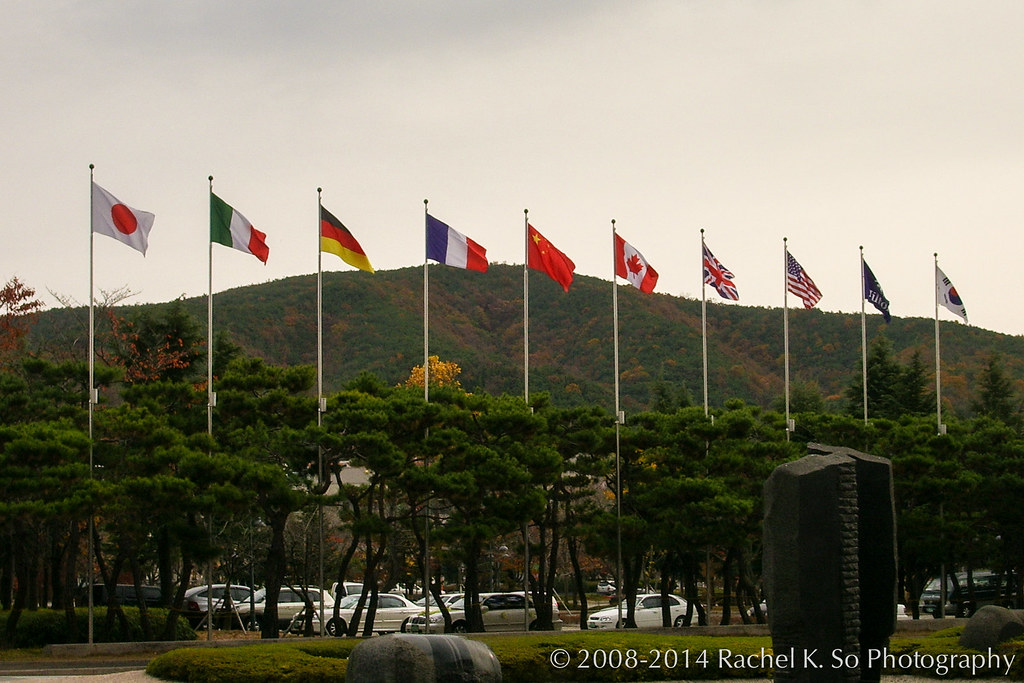 Gyeongju. Photo: InSapphoWeTrust / flickr, BY-SA 2.0.
Gyeongju
Sometimes called the museum without walls, thanks to ancient Silla-dynasty tombs, temples and ruins scattered across the city rather than boxed into a single site.
 Jeonju. Photo: Giuseppe Milo (www.pixael.com) / flickr, BY 2.0.
Jeonju
Best known as the birthplace of bibimbap and home to Jeonju Hanok Village, one of the best-preserved traditional villages in the country.
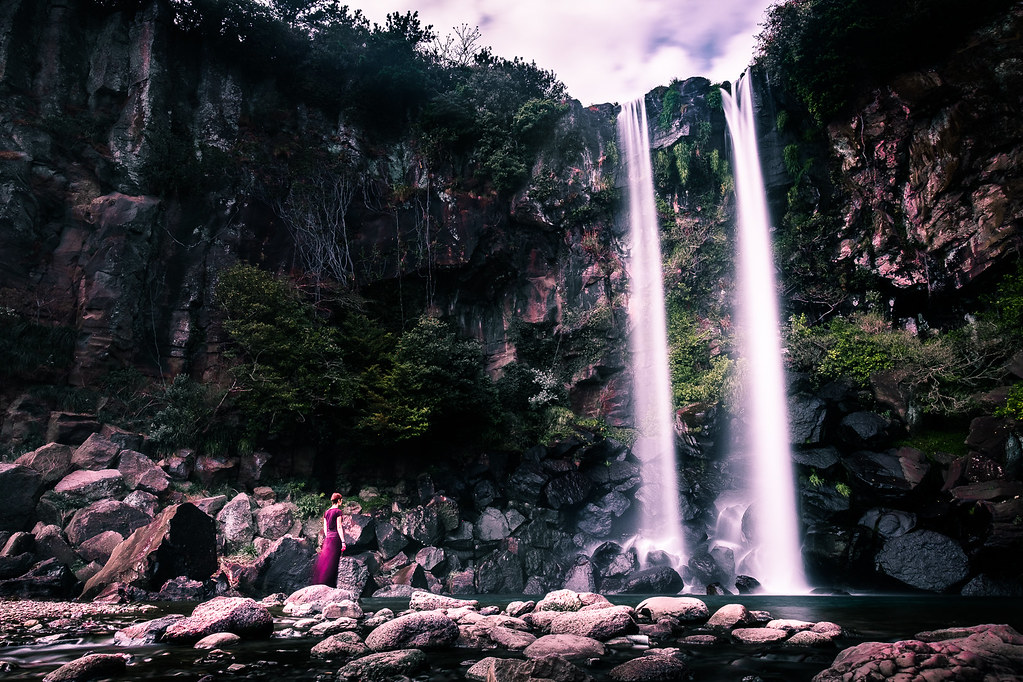 Jeju Island. Photo: Giuseppe Milo (www.pixael.com) / flickr, BY 2.0.
Jeju Island
A volcanic island off the south coast with beaches, waterfalls and Hallasan (South Korea's highest peak) for hikers.
 Sokcho and Seoraksan National Park. Photo: Sam Ng -LP / flickr, BY-NC-SA 2.0.
Sokcho and Seoraksan National Park
The base for hiking Seoraksan, one of the country's most scenic national parks, with cable car access for those not up for the full hike.
To get a feel for the cities you're exploring, we'd highly recommend booking a free walking tour via a tip-based platform like Guruwalk, where they operate. Our Outpacker chatbot is available to help you plan and build out your itinerary to make the most of your trip.
Getting around
Compare time, comfort and cost
South Korea's transport network is one of the most efficient and affordable in Asia, though there's no dedicated backpacker booking aggregator the way 12Go covers Southeast Asia – tickets are booked directly through Korail, city subway apps or the Kakao T app.
Taxi/Rideshare
Kakao T is the standard app for booking taxis (Uber has minimal presence). Metered and generally good value in cities, less so late at night when surcharges apply.
Subway
Seoul and Busan both run extensive, clean, English-signed metro systems – the easiest way to get around either city, and covered by the T-money card.
Bus
Intercity express buses connect almost every town, cheap and frequent, with express bus terminals in every major city.
Train
The KTX high-speed line connects Seoul to Busan in around two and a half hours, and to most major cities in between – fast, comfortable and the backbone of most backpacker routes.
Download offline maps, keep key booking details available without data and avoid placing an international departure immediately after a fragile overland transfer.
Make sure you've got an eSIM or data roaming set up before arrival, since South Korea's WiFi coverage is excellent but eSIMs are the easiest way to stay connected between hostels and cafes.
Culture and events
Events worth knowing about
Dates can shift, so verify the current programme before building a trip around an event in South Korea.
A family holiday rather than a public spectacle, with most businesses closing for two to three days and intercity transport booked out well in advance.
A springtime cherry blossom festival centred on Jinhae's blossom-lined streets and the Gyeonghwa Station rail line, one of the most photographed blossom spots in the country.
A lantern festival marking Buddha's birthday, with a lantern parade through central Seoul and temples strung with paper lanterns nationwide for weeks either side.
A beachside mud festival on the west coast that's become one of the most foreigner-heavy events in the country, with mud wrestling, slides and pools alongside the usual beach bars.
A harvest festival and the biggest family holiday of the year, similar in scale to Seollal – transport is heavily booked and many businesses close for several days.
Confirm the official programme, accommodation pressure and transport changes before committing non-refundable plans.
South Korean food
Discover the flavours that make South Korea memorable
South Korean street food punches well above its price point, and night markets and street stalls make it easy to eat well on very little.
-
 Korean BBQ (gogigui)the classic grill-it-yourself meal, widely available and best with a group to share the cost.Photo: U.S. Army Korea (Historical Image Archive) / flickr, BY-NC-ND 2.0
 -
 Bibimbaprice, vegetables, meat and gochujang mixed together, associated with Jeonju above all.Photo: televiseus / flickr, BY-NC-SA 2.0
 -
 Tteokbokkispicy rice cakes in a gochujang sauce, sold everywhere as a street snack.Photo: U.S. Army Korea (Historical Image Archive) / flickr, BY-NC-ND 2.0
 -
 Kimchi jjigaea spicy fermented cabbage stew, a staple comfort dish.Photo: U.S. Army Korea (Historical Image Archive) / flickr, BY-NC-ND 2.0
 -
 Samgyeopsalgrilled pork belly, another social grill-it-yourself favourite.Photo: U.S. Army Korea (Historical Image Archive) / flickr, BY-NC-ND 2.0
 -
 Kimbaprice and fillings rolled in seaweed, the cheap, portable lunch option.Photo: U.S. Army Korea (Historical Image Archive) / flickr, BY-NC-ND 2.0
 -
 Jjajangmyeonnoodles in a black bean sauce, a Korean-Chinese staple worth trying at least once.Photo: InSapphoWeTrust / flickr, BY-SA 2.0
 -
 Bingsushaved ice dessert with fruit, red bean or condensed milk, essential in summer.Photo: U.S. Army Korea (Historical Image Archive) / flickr, BY-NC-ND 2.0
Visible turnover is a useful guide. Explain allergies carefully and carry a translated note when an ingredient could cause a serious reaction.
Gwangjang Market in Seoul is the single best place to sample a wide range of this in one visit, and most cities run a night food street of some kind.
Hostels
Choose the atmosphere, not just the bed
Hostels cluster in Seoul (Hongdae and central areas) and Busan (Seomyeon and Haeundae), with a much thinner spread elsewhere – check for lockers, aircon and quiet-floor options before booking, and expect smaller properties than the big Southeast Asia chains.
Zzzip Guesthouse in Hongdae
Seoul, South KoreaProperty image from Hostelworld's official HOSCAR record.View photos and details →Seoul Cube Jongro
Seoul, South KoreaProperty image from Hostelworld's official HOSCAR record.View photos and details →G Guest House Itaewon In Seoul
Seoul, South KoreaProperty image from Hostelworld's official HOSCAR record.View photos and details →Seoul Cube Myeongdong
Seoul, South KoreaProperty image from Hostelworld's official HOSCAR record.View photos and details →What you need to pack
Pack for the route, not every possibility
The gear you need depends on the time of year, and South Korea's seasons swing harder than most Southeast Asia destinations, so check out our trip planner for anything specific to your dates – it'll build you a kit list based on exactly when and where you're going.
Climate and clothing
The main challenge here is temperature range rather than heat alone: summers are hot and humid, winters properly cold with regular snow, and neither end of that range is optional if you're travelling across seasons.
- A universal travel adapter and power bank – South Korea runs on Type C/F sockets at 220V.
- A padlock – for hostel lockers, though most Korean hostels run tighter security than the Southeast Asia norm.
Rain and terrain
Choose footwear and weather protection for the terrain and season on your route.
- A reusable water bottle – tap water is generally drinkable in cities, though most locals still prefer bottled or filtered.
- A basic first aid kit – plasters, painkillers and rehydration sachets, though pharmacies are easy to find and well-stocked if you run out.
Hostels and travel days
Hostel laundry facilities are common in Seoul and Busan, less reliable outside the main cities, so plan around city stops for laundry days.
- A compact umbrella – convenience stores sell cheap ones everywhere, but having your own saves a scramble during the summer monsoon.
- Run all of this through the trip planner to build your full kit based on your specific route and dates.
Activities and health
Add specialist equipment only for booked activities and current health guidance.
- Hand warmers – widely available locally in winter but useful to have on arrival for an evening in the cold before you've found a shop.
Language
A few local phrases go a long way
Given how compact and internationally connected South Korea's main cities are, English signage is common on transport and in tourist areas, though everyday spoken English is more limited outside Seoul and Busan than many visitors expect.
Korean
| English | Say it in Korean | Pronunciation |
|---|---|---|
| Hello | Annyeonghaseyo | ahn-nyong-ha-say-yo |
| Goodbye | Annyeonghi gaseyo | ahn-nyong-hee ga-say-yo, said to someone leaving |
| Yes / No | Ne (neh) / Aniyo | ah-nee-yo |
| How much? | Eolmayeyo? | ol-ma-yay-yo |
| How are you? | Jal jinaeseyo? | jal jee-nay-say-yo |
| Please | Juseyo | joo-say-yo, used after a request |
| Do you speak English? | Yeongeo halsu isseoyo? | yong-uh hal-soo ee-ssuh-yo |
| Help, please | Dowajuseyo | doh-wah-joo-say-yo |
| Where are you from? | Eodiseo wasseoyo? | uh-dee-suh wah-ssuh-yo |
| What is your name? / My name is... | Ireumi mwoyeyo? / Je ireumeun...ieyo | ee-room-ee mwo-yay-yo / jeh ee-room-eun...ee-yay-yo |
| Thank you | Gamsahamnida | gahm-sah-hahm-nee-dah |
A small bow with a greeting is appreciated and widely used, even among visitors who don't speak Korean – it reads as basic politeness rather than a requirement.
Visa requirements
Check the rule for your passport
Entry rules depend on nationality, journey and length of stay. Confirm the current rule before booking, then check it again shortly before departure.
Check your exact requirements
Use Sherpa to review entry requirements for your passport and journey. Also confirm passport validity, permitted stay, proof of onward travel and any current arrival-form requirements.
Vaccinations
Make the advice fit your route
Vaccination and health advice depends on your route, duration, medical history and activities.
Review current CDC guidance
Read the current CDC South Korea traveller guidance, then discuss personal recommendations with a qualified clinician.
Arrange appropriate travel insurance and keep policy details available offline. Consider the practical risks created by climate, altitude, insects, animals, water activities and road travel on your specific route.
Safety and common scams
Standard caution, specific habits
South Korea is one of the safer countries you can visit as a solo traveller, with low street crime and a culture where lost items (phones, wallets, bags left in cafes) are routinely handed in rather than taken.
Itaewon and Hongdae bar overcharging
Occasionally a bar in the busiest nightlife districts will pad a tab or push expensive "service" rounds on foreign customers. Check the menu prices before ordering and count your change.
Fake or unofficial ticket resellers
Popular attractions, K-pop events and some festival tickets attract resellers charging above face value on unofficial sites. Book through official venue or festival sites where possible.
Taxi long-routing
Rare, but occasionally a driver unfamiliar with a tourist's destination will take a longer route. Kakao T's in-app tracking makes this easy to spot and avoid compared to hailing on the street.
Pickpocketing on packed subway lines
Uncommon by international standards but not unheard of on the busiest Seoul lines during rush hour. Keep bags zipped and to the front, as you would on any crowded transport system.
None of this should weigh on the trip much – South Korea's reputation as a low-hassle, easy-to-navigate country holds up in practice for the vast majority of visitors.
Sources and feedback
Help us keep this guide useful
Travel information changes. Verify current entry, health, safety and transport guidance before booking or travelling.
If you spot anything that could be improved, corrected or updated, please use our contact page or email hello@outpacker.co.uk.
If any information is outdated or incorrect, Outpacker assumes no liability.