


Malaysia
Street food, islands and rainforest
Build a route across multicultural cities, heritage streets, tropical islands and Borneo's wildlife-rich interior.
Vyacheslav Argenberg / Wikimedia Commons, CC BY 4.0 · Image licence
The honest overview
Get to know Malaysia before fixing the route.
Malaysia is famed for its multicultural food scene, dense rainforest interior and easy island-hopping off both coasts, attracting street food obsessives, first-time Southeast Asia backpackers and short-haul weekenders from Singapore and Australia alike. Malaysia is known for being one of the region's easiest logistics legs, thanks to strong transport links, English spoken widely enough to get by almost anywhere and a visa-free 90 days for UK passport holders, making it a country a lot of people move through quickly rather than one they build a whole trip around.
Part of the joy of backpacking in Malaysia is deciding what deserves more time. Keep space for weather changes, longer travel days and recommendations from people you meet on the road.
Carry a mix of payment methods and keep emergency cash separate from your daily wallet.
There's no single fixed route through Malaysia, and plenty of people arrive with a loose plan that changes once they've made friends in a hostel. That said, most backpackers use Kuala Lumpur as the hub, heading north through Cameron Highlands and George Town in Penang before crossing into southern Thailand, or south through Melaka towards Singapore. From either the west or east coast, hopping over to the Perhentians, Tioman or Redang is a common detour before continuing on. A separate, distinct leg is Malaysian Borneo (Sabah and Sarawak) – most people fly in specifically for Mount Kinabalu, orangutans and diving around Sipadan rather than folding it into a Peninsular route, since there's no overland link between the two halves of the country.
Season by season
What each season means for your trip
Malaysia's weather can change sharply by region and elevation. These are planning patterns, not guarantees.
Wetter travel conditions
Peninsular Malaysia's west coast (Kuala Lumpur, Melaka, Penang, Langkawi) hits its driest, sunniest stretch of the year at 27–32°C, making this peak season for beaches and cities on that side. The east coast islands (Perhentian, Tioman, Redang) and Malaysian Borneo see the opposite: the northeast monsoon brings heavy rain and rough seas, and most east-coast island resorts shut for the season entirely.
Seasonal conditions
A transition window across the country, with temperatures climbing to a humid 28–34°C. The east coast islands reopen and seas calm from around April, making this one of the better windows if you're trying to cover both coasts in one trip.
Wetter travel conditions
Warm and largely dry on the east coast and in Borneo, and the best stretch for diving around Sipadan and Perhentian. The west coast picks up its own southwest monsoon during this window, but it's usually short, heavy afternoon downpours rather than all-day rain.
Wetter travel conditions
Increasingly wet everywhere as the two monsoon systems swap over. The west coast's rain builds through this period while the east coast starts turning wet again from around October, making it the trickiest stretch to time a two-coast route.
Check the forecast for the exact region and elevation on your route, then leave room to change outdoor plans when conditions move.
Cost of day to day travel
Build a budget around the route
On the Peninsular mainland (Kuala Lumpur, Penang, Melaka, Cameron Highlands), £15–20 a day covers a dorm bed, street food and local transport comfortably – Malaysia is one of the cheaper countries in the region to eat and move around in.
On the Peninsular mainland (Kuala Lumpur, Penang, Melaka, Cameron Highlands), £15–20 a day covers a dorm bed, street food and local transport comfortably – Malaysia is one of the cheaper countries in the region to eat and move around in.
Long transfers, specialist tours and headline activities can change the daily total quickly.
Transport, tours and peak-season accommodation deserve a separate buffer.
Average the full trip rather than forcing every day into the same number. Keep emergency funds separate from daily spending.
Key backpacker routes
Find the route that feels right for you
There is no single route you need to follow. Let your timeframe, interests and season shape the journey through Malaysia.
Start with the natural route Core journey
There's no single fixed route through Malaysia, and plenty of people arrive with a loose plan that changes once they've made friends in a hostel. That said, most backpackers use Kuala Lumpur as the hub, heading north through Cameron Highlands and George Town in Penang before crossing into southern Thailand, or south through Melaka towards Singapore.
Add the region that earns your time Build depth
From either the west or east coast, hopping over to the Perhentians, Tioman or Redang is a common detour before continuing on. A separate, distinct leg is Malaysian Borneo (Sabah and Sarawak) – most people fly in specifically for Mount Kinabalu, orangutans and diving around Sipadan rather than folding it into a Peninsular route, since there's no overland link between the two halves of the country.
Main destinations and attractions
Where to spend your days
Pick a connected group and leave room for hostel friendships and changing plans. Malaysia rewards depth more than a checklist of stops.
 Kuala Lumpur. Photo: Guwashi999 / flickr, BY 2.0.
Kuala Lumpur
The capital and most people's entry point, with the Petronas Towers and KLCC Park as the obvious anchor.
 Melaka (Malacca). Photo: Christopher Chan / flickr, BY-NC-ND 2.0.
Melaka (Malacca)
A UNESCO-listed port city a couple of hours south of KL, known for its Dutch and Portuguese colonial architecture along Jonker Street and the Melaka River.
 Penang (George Town). Photo: Clay Gilliland / flickr, BY-SA 2.0.
Penang (George Town)
Malaysia's food capital and a highlight for most backpackers, with George Town's UNESCO old town packed with street art, colonial shophouses and some of the country's best hawker food.
 Cameron Highlands. Photo: liewcf / flickr, BY-SA 2.0.
Cameron Highlands
A cool-climate hill station a few hours from KL, known for its tea plantations, strawberry farms and jungle trekking.
 Genting Highlands. Photo: Phalinn Ooi / flickr, BY 2.0.
Genting Highlands
A casino and theme-park resort perched on a mountaintop near KL, geared heavily towards day-tripping families and domestic gamblers rather than independent travellers. Most backpackers give it a miss in favour of Cameron Highlands.
 Perhentian, Tioman and Redang Islands. Photo: wazari / flickr, BY-NC-ND 2.0.
Perhentian, Tioman and Redang Islands
The main east coast island cluster, known for clear water, coral reefs and a slower pace than the west coast beaches.
To get a proper feel for the cities, we'd recommend booking a 'free walking tour' via Guruwalk in KL, Penang or Melaka – you pay via a tip-based system and it's a solid way to orient yourself on day one. Our Outpacker chatbot is available to help you plan and build out your itinerary to make the most of your trip.
Getting around
Compare time, comfort and cost
12Go covers bus, train and ferry bookings across Peninsular Malaysia in one place and is the site most backpackers end up using to compare routes.
Taxi/Rideshare
Grab operates across the country and is the standard way to get around cities, cutting out the need to haggle with metered taxis.
Bus
Long-distance coaches connect all the major cities and are the cheapest way to cover ground – overnight buses between KL and Penang or Melaka save a hostel night.
Train
KTM's ETS service runs between KL, Ipoh, Butterworth (for Penang) and up towards the Thai border, and is a comfortable, reasonably fast alternative to the bus on that corridor.
Plane
Domestic budget carriers, mainly AirAsia, make the hop to Malaysian Borneo (Kota Kinabalu, Kuching) necessary rather than optional, since there's no overland or direct ferry route from the Peninsula.
Make sure you've got an eSIM or data roaming set up before you land, and download offline maps for anywhere you'll lose signal, including most of the jungle interior.
Culture and events
Events worth knowing about
Dates can shift, so verify the current programme before building a trip around an event in Malaysia.
A Hindu festival centred on Batu Caves just outside KL, where devotees carry ornate kavadi frames – some pierced through skin with hooks and skewers as an act of devotion – on a procession up the 272 steps to the temple.
Lion dances, lantern displays and firecrackers take over Chinatown districts in KL, Penang and Melaka, with Penang's celebrations drawing particularly large crowds given its historic Chinese community.
A Buddhist festival marking the Buddha's birth, enlightenment and death, observed with candlelit processions and temple visits, most visibly at KL's Buddhist temples and in Penang.
A harvest festival celebrated by Sabah's indigenous Kadazan-Dusun communities, with traditional dance, rice wine and a beauty pageant marking the end of the rice harvest.
A religious festival marking the end of Ramadan, celebrated with open houses, family visits and street decorations nationwide.
Confirm the official programme, accommodation pressure and transport changes before committing non-refundable plans.
Malaysian food
Discover the flavours that make Malaysia memorable
Malaysia's food scene draws as much from Malay, Chinese and Indian traditions as it does from anywhere else in the region, and hawker centres are where all three collide.
-
 Nasi Lemakcoconut rice with sambal, anchovies, peanuts and egg, treated as the unofficial national dish.Photo: Isuann L. / flickr, BY-NC-ND 2.0
 -
 Char Kway Teowwok-fried flat noodles with prawns, egg and Chinese sausage, particularly good in Penang.Photo: avlxyz / flickr, BY-SA 2.0
 -
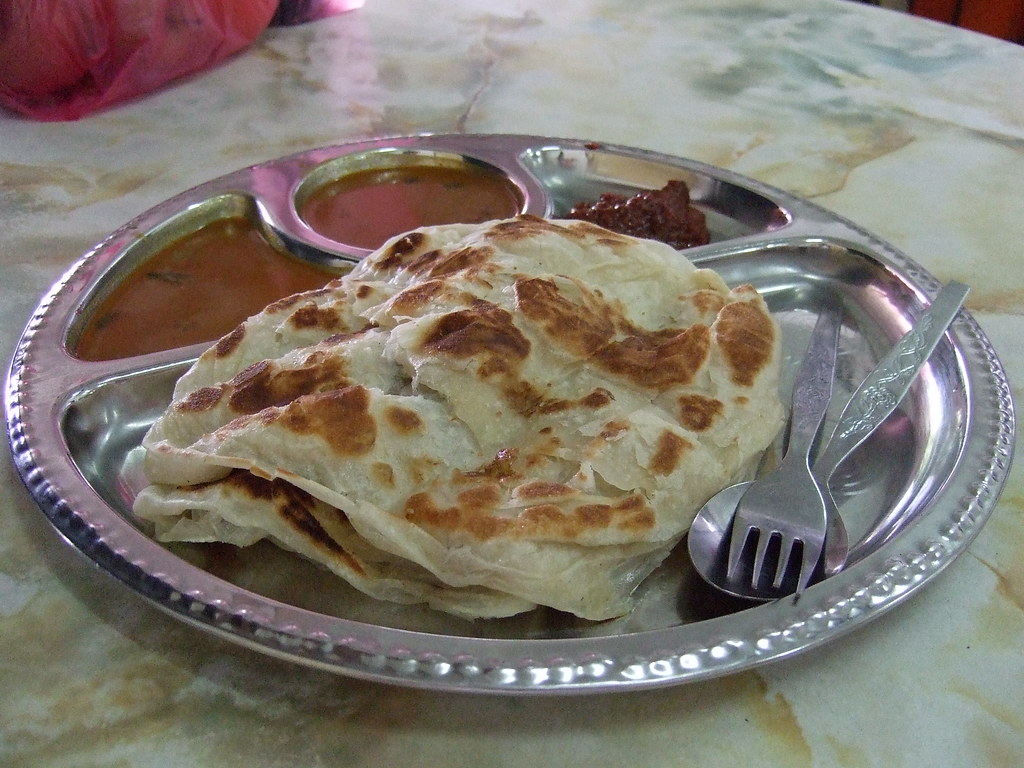 Roti Canaia flaky flatbread served with dhal or curry, usually eaten for breakfast.Photo: goosmurf / flickr, BY 2.0
 -
 Penang Assam Laksaa sour, fish-based noodle soup distinct from the coconut-based laksas found elsewhere in the region.Photo: avlxyz / flickr, BY-NC-SA 2.0
 -
 Sataygrilled skewered meat served with peanut sauce, sold everywhere as a snack or light meal.Photo: Black_Claw / flickr, BY 2.0
 -
 Nasi Kandara Penang speciality of rice served with a mix of curries and sides, ladled together at the counter.Photo: goodiesfirst / flickr, BY 2.0
 -
 Rendanga slow-cooked, spice-heavy meat dish, drier and richer than most curries.Photo: Wee Hong / wikimedia, BY-SA 4.0
 -
 Cendola shaved-ice dessert with palm sugar syrup, coconut milk and green rice-flour jelly.Photo: Amani Hasan / flickr, BY 2.0
Hawker centres and night markets are the most efficient way to sample a lot of this in one sitting – most towns run at least one worth seeking out.
Visible turnover is a useful guide. Explain allergies carefully and carry a translated note when an ingredient could cause a serious reaction.
Hostels
Choose the atmosphere, not just the bed
Malaysia's mainland hostel scene is solid and well-developed, especially in KL, Penang and Cameron Highlands – check for lockers, aircon and a real social space if that's what you're after.
EZ Social Hostel Georgetown, Penang
Penang, MalaysiaProperty image from Hostelworld's official HOSCAR record.View photos and details →Chinatown Hostel by Mingle
Kuala Lumpur, MalaysiaProperty image from Hostelworld's official HOSCAR record.View photos and details →1000 Miles (Thousand Miles)
Kuala Lumpur, MalaysiaProperty image from Hostelworld's official HOSCAR record.View photos and details →House of Journey
Penang, MalaysiaProperty image from Hostelworld's official HOSCAR record.View photos and details →What you need to pack
Pack for the route, not every possibility
The gear you need depends on the time of year and wider region you're covering, so check out our trip planner for a kit list built around your exact dates and route.
Climate and clothing
The main challenge here is heat, humidity and properly heavy tropical downpours – Malaysia's rain tends to arrive in short, intense bursts rather than Thailand's steadier drizzle, so a proper light rain jacket earns its place alongside breathable clothing.
- A lightweight, packable rain jacket – downpours here arrive fast and hard, and a poncho won't cut it on a scooter or hike.
- Padlocks – for hostel lockers and securing bags on overnight buses and trains.
- Run all of this through the trip planner to build your full kit based on your specific route and dates.
Rain and terrain
Hostels typically offer affordable laundry services, and local laundrettes are easy to find in most towns, so you can travel light either way.
- DEET mosquito repellent – dengue is present nationwide and malaria risk exists in some rural interior and Borneo areas, so this earns its place regardless of where you're headed.
- A basic first aid kit – plasters, rehydration sachets and something for an upset stomach.
Hostels and travel days
If you're heading up to Cameron Highlands or attempting Mount Kinabalu, pack a proper warm layer – temperatures at altitude drop well below what the lowland heat prepares you for, especially for a pre-dawn summit push.
- A dry bag – for island boat transfers and jungle river crossings, keeps your phone and passport dry.
- A reusable water bottle with a filter – tap water isn't reliably drinkable outside major cities, and this cuts down on plastic.
Activities and health
Add specialist equipment only for booked activities and current health guidance.
- A modest cover-up – a scarf or light long-sleeve for visiting mosques, since shoulders and knees need covering and women may be asked to cover their hair.
- One thing you won't need: a travel adapter. Malaysia runs on the same Type G sockets and 240V as the UK, so anything you'd plug in at home works here without modification.
Language
A few Bahasa Malaysia phrases go a long way
Bahasa Malaysia (Malay) is the official language, but English is widely spoken as a real lingua franca, especially in tourist areas, cities and anywhere backpacker infrastructure exists – you'll get by comfortably on English alone in most of the country.
| English | Say it in Bahasa Malaysia | Pronunciation |
|---|---|---|
| Hello | Salam (sa-lam) or Selamat pagi/petang for a time-specific greeting | morning/afternoon |
| Goodbye | Selamat tinggal | se-la-mat ting-gal |
| Yes / No | Ya (yah) / Tidak | tee-dah |
| How much? | Berapa harga? | be-ra-pa har-ga |
| How are you? | Apa khabar? | a-pa ka-bar |
| Please | Tolong | to-long |
| Do you speak English? | Boleh cakap Bahasa Inggeris? | bo-leh cha-kap ba-ha-sa ing-ge-ris |
| Help, please | Tolong saya | to-long sa-ya |
| Where are you from? | Awak dari mana? | a-wak da-ri ma-na |
| What is your name? / My name is... | Siapa nama awak? / Nama saya... | see-ah-pa na-ma a-wak / na-ma sa-ya |
| Thank you | Terima kasih | teh-ree-mah kah-seh |
| Use the phrases respectfully: Local usage varies by region. A respectful attempt is usually appreciated, and a translation app is useful for complex questions. | ||
Visa requirements
Check the rule for your passport
Entry rules depend on nationality, journey and length of stay. Confirm the current rule before booking, then check it again shortly before departure.
Check your exact requirements
Use Sherpa to review entry requirements for your passport and journey. Also confirm passport validity, permitted stay, proof of onward travel and any current arrival-form requirements.
Vaccinations
Make the advice fit your route
Vaccination and health advice depends on your route, duration, medical history and activities.
Review current CDC guidance
Read the current CDC Malaysia traveller guidance, then discuss personal recommendations with a qualified clinician.
Arrange appropriate travel insurance and keep policy details available offline. Consider the practical risks created by climate, altitude, insects, animals, water activities and road travel on your specific route.
Safety and common scams
Standard caution, specific habits
Malaysia is a safe destination for solo travellers, and most people pass through without any issues beyond the odd bit of overcharging.
Taxi meter refusal
Especially around tourist areas and airports, some drivers will refuse the meter and quote an inflated flat fare. Use Grab instead to sidestep this entirely.
Credit card and ATM fraud
Skimming devices occasionally turn up on standalone ATMs. Stick to machines attached to banks where possible and keep card use to reputable shops and restaurants.
Petty theft in tourist areas
Bag-snatching and pickpocketing happen in busy markets and nightlife strips, same as any city with heavy tourist footfall. Keep valuables zipped away and don't leave bags unattended.
Fake charity collectors
Occasionally people will approach with donation boxes for causes that don't check out. Politely decline if anything feels off.
The FCDO advises against all but essential travel to the islands and dive sites off the eastern Sabah coast between Sandakan and Tawau (including Lankayan Island), due to the risk of kidnapping – this doesn't affect the Sabah mainland, Kota Kinabalu or Mount Kinabalu. If your Borneo route includes that specific stretch of coast, check gov.uk/foreign-travel-advice/malaysia directly before booking. One thing worth knowing regardless of how relaxed the rest of your trip is: Malaysia enforces some of the strictest drug penalties in the world, including the death penalty for trafficking, and this applies to small amounts too. It's not a country to take any chances in on that front. None of this should put you off the trip – Malaysia's day-to-day hassle level is low compared to plenty of its neighbours.
Sources and feedback
Help us keep this guide useful
Travel information changes. Verify current entry, health, safety and transport guidance before booking or travelling.
If you spot anything that could be improved, corrected or updated, please use our contact page or email hello@outpacker.co.uk.
If any information is outdated or incorrect, Outpacker assumes no liability.