


Kenya
Safari plains and Swahili shores
Connect East Africa's defining wildlife landscapes with Rift Valley adventures, Nairobi energy and the Indian Ocean coast.
Svein-Magne Tunli - tunliweb.no / Wikimedia Commons, CC BY-SA 4.0 · Image licence
The honest overview
Get to know Kenya before fixing the route.
Kenya is famed for its safari landscapes, Swahili coast beaches and role as the transport and safari hub of East Africa, attracting wildlife-chasers, coast-hoppers and Rift Valley trekkers alike from every continent. Kenya is known for being East Africa's most established safari and beach circuit, thanks to Nairobi's transport links, a mature Maasai Mara and Amboseli safari network and a long-running Indian Ocean coast route, though FCDO currently advises against all travel to areas near the Somalia border in the north-east and against all but essential travel to some neighbouring areas, both well outside the standard backpacker route through the country.
Part of the joy of backpacking in Kenya is deciding what deserves more time. Keep space for weather changes, longer travel days and recommendations from people you meet on the road.
Carry a mix of payment methods and keep emergency cash separate from your daily wallet.
There's no single fixed route through Kenya, and plans tend to shift once you fall in with other travellers at a hostel or on a safari truck. That said, most independent trips run some version of Nairobi as the hub, out to the Rift Valley (Lake Naivasha, Hell's Gate, Lake Nakuru) and the Maasai Mara for safari, then either back to Nairobi or on to Mombasa and the south coast (Diani, Tiwi) by the SGR railway or overnight bus. Onward travel into Tanzania for the Serengeti and Zanzibar via the Namanga border crossing is common, as is a loop up to Uganda via Busia or Malaba for those doing a wider East Africa trip. The north-east of the country, including the areas around the Somalia border, sits outside every one of these routes and outside current FCDO advice – see Safety and Common Scams.
Season by season
What each season means for your trip
Kenya's weather can change sharply by region and elevation. These are planning patterns, not guarantees.
Drier travel window
Warm and mostly dry with temperatures of 24–28°C in Nairobi and 28–32°C on the coast. One of the two dry windows and a solid time for safari, though it's also the busiest and priciest stretch around Christmas and New Year.
Wetter travel conditions
The "long rains" bring heavy, often daily downpours and temperatures of 20–26°C inland. Roads in the Mara and rural areas can turn to mud, and some coastal lodges close for maintenance. Prices drop sharply if you don't mind the rain.
Drier travel window
The main dry season and peak safari window, with temperatures of 20–25°C in the highlands and cooler mornings and evenings. July to October is also when the wildebeest migration crosses into the Mara from the Serengeti, making this the busiest and most expensive stretch of the year for safari bookings.
Wetter travel conditions
The "short rains" bring shorter, more localised afternoon showers and temperatures of 22–27°C. Landscapes turn green fast and it's a quieter, cheaper window than the long dry season, though some Mara tracks can still get cut off after heavy days.
Seasonal conditions
Note that Kenya straddles the equator, so this pattern holds fairly consistently nationwide bar altitude – Nairobi and the highlands run noticeably cooler than the coast and the arid north at any time of year.
Check the forecast for the exact region and elevation on your route, then leave room to change outdoor plans when conditions move.
Cost of day to day travel
Build a budget around the route
Away from safari costs, day-to-day travel in Kenya runs £25–35 a day for a dorm bed, street food or local restaurant meals, matatu (shared minibus) fares and the odd museum or market visit.
Away from safari costs, day-to-day travel in Kenya runs £25–35 a day for a dorm bed, street food or local restaurant meals, matatu (shared minibus) fares and the odd museum or market visit.
Long transfers, specialist tours and headline activities can change the daily total quickly.
Transport, tours and peak-season accommodation deserve a separate buffer.
Average the full trip rather than forcing every day into the same number. Keep emergency funds separate from daily spending.
Key backpacker routes
Find the route that feels right for you
There is no single route you need to follow. Let your timeframe, interests and season shape the journey through Kenya.
Start with the natural route Core journey
There's no single fixed route through Kenya, and plans tend to shift once you fall in with other travellers at a hostel or on a safari truck. That said, most independent trips run some version of Nairobi as the hub, out to the Rift Valley (Lake Naivasha, Hell's Gate, Lake Nakuru) and the Maasai Mara for safari, then either back to Nairobi or on to Mombasa and the south coast (Diani, Tiwi) by the SGR railway or overnight bus.
Add the region that earns your time Build depth
Onward travel into Tanzania for the Serengeti and Zanzibar via the Namanga border crossing is common, as is a loop up to Uganda via Busia or Malaba for those doing a wider East Africa trip. The north-east of the country, including the areas around the Somalia border, sits outside every one of these routes and outside current FCDO advice – see Safety and Common Scams.
Main destinations and attractions
Where to spend your days
Pick a connected group and leave room for hostel friendships and changing plans. Kenya rewards depth more than a checklist of stops.
 Nairobi. Photo: exfordy / flickr, BY 2.0.
Nairobi
Kenya's capital and the start and end point of most trips, known for its mix of city energy and real wildlife on its doorstep.
 Maasai Mara and the Rift Valley. Photo: Wajahat Mahmood / flickr, BY-SA 2.0.
Maasai Mara and the Rift Valley
The Mara is Kenya's headline safari destination, home to the Big Five and, from July to October, the wildebeest migration crossing the Mara River.
 Amboseli and Tsavo. Photo: otherpaths / flickr, BY-SA 2.0.
Amboseli and Tsavo
Amboseli is famous for its elephant herds photographed against Kilimanjaro's backdrop on clear mornings, while Tsavo (East and West) is Kenya's largest protected area, known for its red-dust elephants and rugged, less-crowded feel compared with the Mara.
 Mombasa and the south coast. Photo: . Ray in Manila / flickr, BY 2.0.
Mombasa and the south coast
Mombasa's Old Town and Fort Jesus give a real dose of Swahili-Portuguese history alongside the beach stops. South of the city, Diani Beach is Kenya's main backpacker beach hub, with a small but real hostel cluster, white sand and reef diving, though the resort strip either side of it is squarely package-tourist territory rather than budget backpacker.
 Watamu and Malindi. Photo: UNESCO Africa / flickr, BY-NC-SA 2.0.
Watamu and Malindi
North of Mombasa, Watamu has some of Kenya's best snorkelling and diving inside its marine park, while Malindi carries a strong Italian package-tourist influence that makes it noticeably pricier and less backpacker-oriented than Watamu or Diani.
 Lamu Archipelago. Photo: Willemvdk / flickr, BY-NC-ND 2.0.
Lamu Archipelago
Lamu Old Town is a UNESCO-listed Swahili settlement with no cars, narrow alleys and a slower pace than anywhere else on the coast.
To get a feel for Nairobi and Mombasa, look out for tip-based walking tours run through local guide collectives rather than a single paid operator. Our Outpacker chatbot can help you build a route around safari timing, coast stops and budget.
Getting around
Compare time, comfort and cost
Matatus (shared minibuses) are the backbone of budget travel around Kenya and connect nearly every town, though they're driven hard and get crowded – not the most comfortable option but by far the cheapest.
Taxi/Rideshare
Uber and the local Bolt app both operate in Nairobi and Mombasa and are the safer, more transparent option than hailing a taxi on the street, especially at night.
Bus/Matatu
Coach companies cover the main intercity routes with assigned seats and are the standard way to cover long distances; matatus fill in everywhere else but leave when full rather than to a fixed timetable, so build in flexibility.
Train
The Standard Gauge Railway (SGR) runs a comfortable, reliable service between Nairobi and Mombasa and is worth the modest premium over the bus for that route alone.
Plane
Domestic flights (Kenya Airways, Jambojet, safarilink-style charter operators) connect Nairobi to Mombasa, the coast strip, Maasai Mara airstrips and Lamu, and are often the only sensible way into the Mara conservancies or onto Lamu Island itself – FCDO advises flying to Lamu rather than travelling by road, given the security situation on the adjoining mainland.
Make sure you've got an eSIM or local SIM sorted at the airport (Safaricom has the best coverage), and download offline maps for Nairobi and Mombasa in case signal drops in more rural stretches.
Culture and events
Events worth knowing about
Dates can shift, so verify the current programme before building a trip around an event in Kenya.
date shifts) – A religious festival marking the birth of the Prophet Muhammad, centred on Lamu's Old Town with dhow races, Swahili poetry recitals and processions through the narrow streets.
An off-road charity rally through rugged, undisclosed terrain that raises funds for the Rhino Ark conservation trust and its work fencing forest ecosystems.
One of East Africa's biggest road races, drawing elite East African runners alongside thousands of amateur entrants through the capital's streets, with routes closed and a real city-wide buzz on race day.
A cultural festival celebrating Swahili heritage on Lamu Island, featuring dhow races, traditional dance and music, poetry and craft stalls across a long weekend, drawing both locals and visitors to the island's waterfront.
Confirm the official programme, accommodation pressure and transport changes before committing non-refundable plans.
Kenyan food
Discover the flavours that make Kenya memorable
Kenyan food leans hearty and grill-focused inland, with a distinct Swahili coconut-and-spice influence on the coast. Street food and local canteens (known as "hotelis") are generally safe and cheap, though as anywhere, stick to stalls with visible turnover and freshly cooked food rather than anything that's been sitting out.
-
 Nyama Chomagrilled meat, usually goat or beef, Kenya's unofficial national dish and best eaten at a proper nyama choma joint with a side of kachumbari.Photo: hktang / flickr, BY 2.0
 -
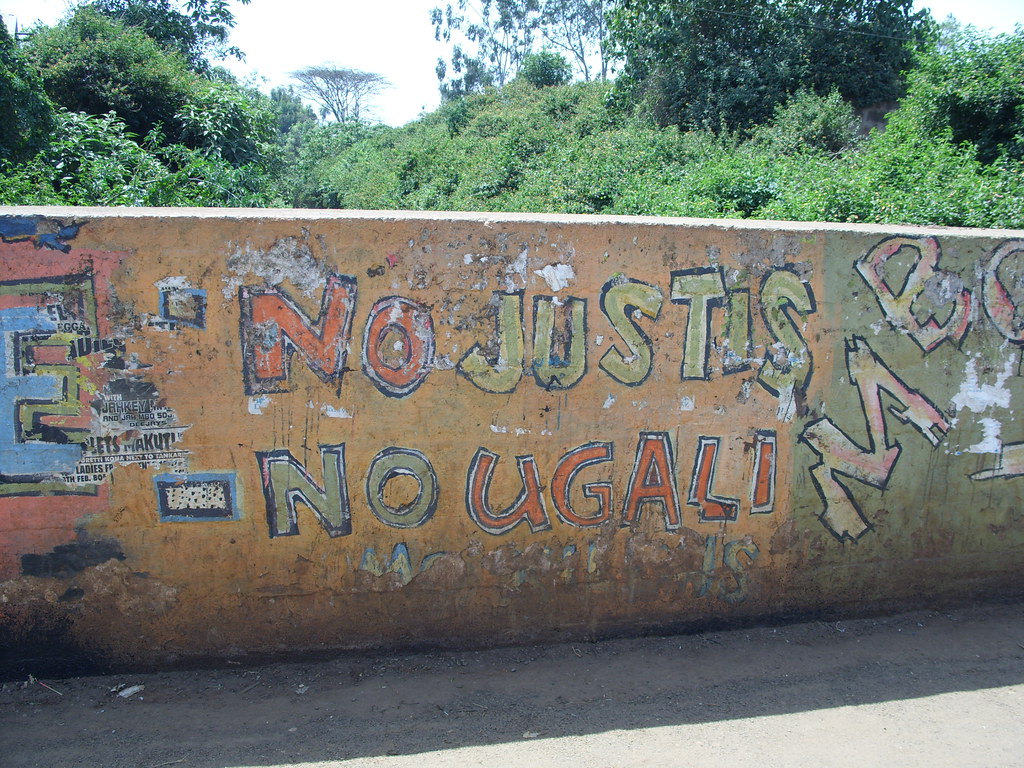 Ugalia stiff maize-flour staple, eaten with your hands alongside stews, greens or nyama choma.Photo: timbrauhn / flickr, BY-NC-SA 2.0
 -
 Sukuma Wikisautéed collard greens, a near-universal side dish and one of the cheapest, most common vegetables on any plate.Photo: DFID - UK Department for International Development / flickr, BY 2.0
 -
 Chapatia soft flatbread with East African Indian influence, sold everywhere from street stalls to sit-down hotelis.Photo: elycefeliz / flickr, BY-NC-ND 2.0
 -
 Pilauspiced rice cooked with meat, a coastal staple with clear Swahili and Omani roots.Photo: Rod Waddington / flickr, BY-SA 2.0
 -
 Samosasfried pastry parcels, usually meat or vegetable-filled, sold as a cheap snack across the country.Photo: US Army Africa / flickr, BY 2.0
 -
 Mandazia lightly sweet, doughnut-like fried bread, popular for breakfast with tea.Photo: Benno Hansen / flickr, BY 2.0
 -
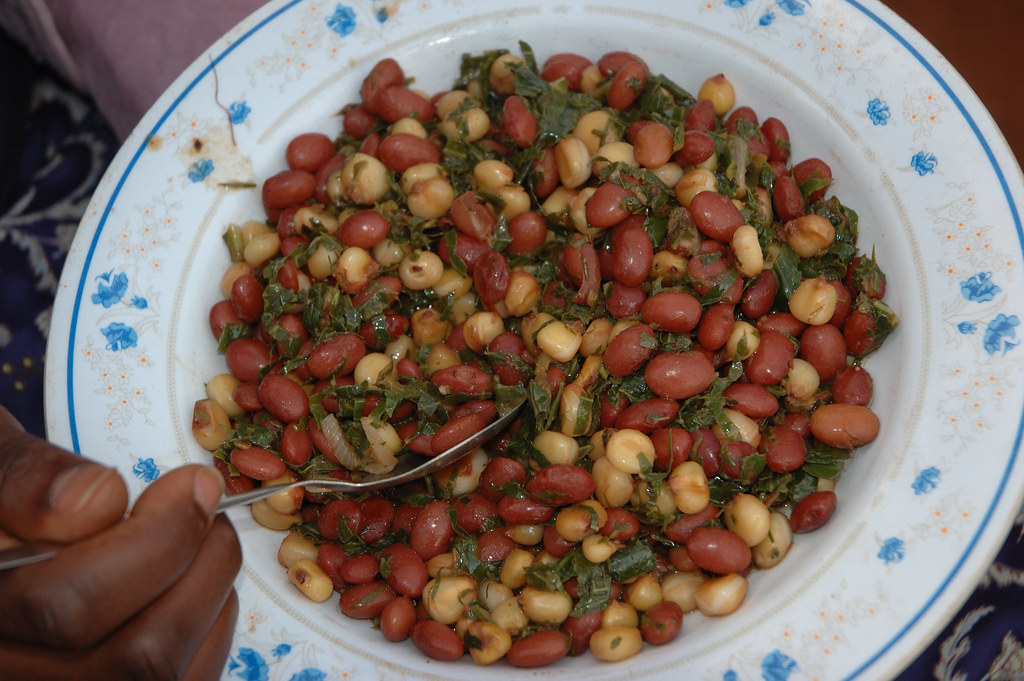 Githeria maize-and-bean stew, simple, filling and one of the cheapest full meals you'll find.Photo: CIMMYT / flickr, BY-NC-SA 2.0
Local hotelis and coast-side food stalls are the best way to sample a lot of this cheaply; in Nairobi, Westlands and the CBD's cheaper eateries both do a good spread.
Visible turnover is a useful guide. Explain allergies carefully and carry a translated note when an ingredient could cause a serious reaction.
Hostels
Choose the atmosphere, not just the bed
Kenya's hostel scene is real but concentrated in a handful of hubs – Nairobi, Diani and a couple of coast and lakeside spots – rather than spread evenly everywhere the way Thailand's is.
TuliaHouse Backpackers
Mombasa, KenyaProperty image from Hostelworld's official HOSCAR record.View photos and details →Jabulani Backpackers Hostels
Nairobi, KenyaProperty image from Hostelworld's official HOSCAR record.View photos and details →The Library Hostel
Nairobi, KenyaProperty image from Hostelworld's official HOSCAR record.View photos and details →Diani Backpackers
Diani, KenyaProperty image from Hostelworld's official HOSCAR record.View photos and details →What you need to pack
Pack for the route, not every possibility
Run your dates and route through our trip planner chatbot for a kit list tailored to your specific safari and coast mix, since Kenya's climate shifts sharply depending on where you are on any given day.
Climate and clothing
Kenya's real packing challenge is temperature swing, not just heat – early morning safari game drives in an open-sided vehicle can be properly cold, even though the afternoon might hit 25°C, so a proper warm layer (a fleece or light down jacket) is non-negotiable for the Mara, Amboseli or highland stops, alongside breathable, muted-colour clothing (khaki, olive, grey) for daytime game drives, since bright colours and dark blue can attract tsetse flies in some areas.
- A warm layer for early morning game drives – temperatures at dawn on safari can drop into single digits even in the dry season.
- A universal travel adapter – Kenya runs on Type G sockets at 240V.
- Run all of this through the trip planner to fine-tune for your exact route and season.
Rain and terrain
Choose footwear and weather protection for the terrain and season on your route.
- Antimalarials and DEET mosquito spray – malaria risk covers most of the country outside Nairobi and the highlands; speak to a GP or travel clinic about the right antimalarial for your route.
- A basic first aid kit – plasters, rehydration sachets and something for an upset stomach, useful anywhere off the main tourist trail.
Hostels and travel days
Keep your bag light and your daily essentials easy to reach on moving days.
- Binoculars – surprisingly useful on safari and something most people wish they'd packed rather than relying on the guide's pair.
- A reusable water bottle with a filter – tap water isn't reliably drinkable outside major hotels, and this cuts down on buying bottled water constantly.
Activities and health
Add specialist equipment only for booked activities and current health guidance.
- A dust-proof bag or cover for electronics – safari roads are unpaved and dusty, especially in the dry season.
- Neutral-toned clothing – khaki, olive or grey for game drives; avoid bright colours and dark blue/black, which can attract tsetse flies in some parks.
Language
A few Swahili phrases go a long way
Hello – Jambo (jam-boh) or Habari (ha-bah-ree)
| English | Say it in Swahili | Pronunciation |
|---|---|---|
| Hello | Jambo (jam-boh) or Habari | ha-bah-ree |
| Goodbye | Kwaheri | kwa-heh-ree |
| Yes / No | Ndiyo (n-dee-yoh) / Hapana | ha-pah-nah |
| How much? | Bei gani? | bay gah-nee |
| How are you? | Habari yako? | ha-bah-ree yah-koh |
| Please | Tafadhali | ta-fa-dha-lee |
| Do you speak English? | Unazungumza Kiingereza? | oo-na-zoon-goom-za kee-in-geh-reh-za |
| Help, please | Nisaidie, tafadhali | nee-sah-ee-dee-eh ta-fa-dha-lee |
| Where are you from? | Unatoka wapi? | oo-na-toh-ka wah-pee |
| What is your name? / My name is... | Jina lako nani? / Jina langu ni... | jee-na la-koh na-nee / jee-na lan-goo nee |
| Thank you | Asante | ah-sahn-teh |
| Use the phrases respectfully: English is Kenya's other official language and widely spoken in Nairobi, on the coast and across the tourism industry, so you'll rarely be stuck – but a few lines of Swahili go a long way outside the main tourist spots and are appreciated everywhere. | ||
Visa requirements
Check the rule for your passport
Entry rules depend on nationality, journey and length of stay. Confirm the current rule before booking, then check it again shortly before departure.
Check your exact requirements
Use Sherpa to review entry requirements for your passport and journey. Also confirm passport validity, permitted stay, proof of onward travel and any current arrival-form requirements.
Vaccinations
Make the advice fit your route
Vaccination and health advice depends on your route, duration, medical history and activities.
Review current CDC guidance
Read the current CDC Kenya traveller guidance, then discuss personal recommendations with a qualified clinician.
Arrange appropriate travel insurance and keep policy details available offline. Consider the practical risks created by climate, altitude, insects, animals, water activities and road travel on your specific route.
Safety and common scams
Standard caution, specific habits
FCDO currently advises against all travel to Mandera County, most of Wajir and Garissa counties, and most of Lamu County (excluding Lamu and Manda Islands themselves), and against all but essential travel to some neighbouring areas along the Kenya-Somalia border, due to the risk of terrorism from groups based in Somalia.
Nairobi street theft and snatch-and-grab
Phones and bags get grabbed from open car windows or by passing motorbikes, particularly in the CBD. Keep valuables out of sight and avoid walking with a phone out in your hand on the street.
Fake safari operators and unlicensed guides
Especially online, where a too-good-to-be-true safari price often means an unlicensed operator or one that doesn't exist. Book through an operator you can verify is registered, and be wary of anyone approaching you directly in Nairobi with a "deal."
Overcharging on matatus and in markets
As a visible tourist, expect an inflated opening price on fares and souvenirs; a bit of good-natured haggling is normal and expected.
Beach touts on the coast
Diani and Mombasa's beaches see persistent hawkers selling tours, souvenirs and boat trips; a firm, polite "hapana, asante" (no, thank you) usually works better than ignoring them.
Outside those specific areas, Kenya's well-travelled tourist circuit sees a large volume of independent and group travellers every year, but petty crime and opportunistic theft are common enough in Nairobi in particular that you should stay alert, especially after dark. Common issues include: If you're travelling to Kenya despite the current advisory in the affected north-eastern areas, that's realistically aid, NGO or journalistic work rather than independent backpacking, and needs its own risk planning with your organisation rather than anything in this guide.
Sources and feedback
Help us keep this guide useful
Travel information changes. Verify current entry, health, safety and transport guidance before booking or travelling.
If you spot anything that could be improved, corrected or updated, please use our contact page or email hello@outpacker.co.uk.
If any information is outdated or incorrect, Outpacker assumes no liability.