


India
A country of countless journeys
Choose one connected region at a time for food, history, spirituality, coastlines and mountain routes that reward slow travel.
The honest overview
Get to know India before fixing the route.
India is famed for its temples, palaces and coastline, its overwhelming variety of food and its sheer scale, attracting first-time backpackers, spiritual seekers and long-haul overlanders alike from every corner of the world. India is known for being a classic backpacker rite of passage, thanks to its established hostel and train network, its rock-bottom daily costs and the sheer density of things to see in a single trip, making it one of the most rewarding – and most intense – countries a newer traveller can start with.
Part of the joy of backpacking in India is deciding what deserves more time. Keep space for weather changes, longer travel days and recommendations from people you meet on the road.
Card and UPI QR payments are everywhere in cities now, but carry cash for rural areas, local buses, and smaller towns where card machines are still rare.
There's no single fixed route through India – it's simply too big, and most backpackers build a flexible plan around one region rather than trying to cover the whole country in one trip. The classic entry point for first-timers is the Golden Triangle (Delhi–Agra–Jaipur), often extended into a wider Rajasthan loop through Jodhpur, Udaipur and Pushkar. From there, many head north to Rishikesh and on into Himachal Pradesh (Manali, Dharamshala) for mountains and a slower pace, or south to Goa and down through Karnataka and Kerala for beaches and backwaters. Hampi acts as an informal crossroads between the two. Some continue overland into Nepal via the Sonauli or Raxaul land borders from Varanasi – worth knowing your e-Visa doesn't cover re-entry by land, so check the rules before you commit to that loop. The Northeast sits largely outside this standard circuit; it needs its own dedicated leg and, for some states, a separate permit (see Visa Requirements).
Season by season
What each season means for your trip
India's weather can change sharply by region and elevation. These are planning patterns, not guarantees.
Cooler-season travel
The best weather for most of the country: 15–25°C on the northern plains with cold nights in Delhi, Rajasthan and the hills, and warm, pleasant days in Goa and Kerala further south. Peak tourist season nationwide.
Wetter travel conditions
Punishing pre-monsoon heat builds across the plains, with Delhi, Rajasthan and Central India regularly hitting 38–45°C by May. Hill stations (Manali, Shimla, Darjeeling) become the main escape from the heat, and this is when most people head north into the mountains instead.
Wetter travel conditions
The southwest monsoon arrives in Kerala first (early June) and sweeps north over the following weeks, bringing heavy, near-daily rain to most of the country. The Western Ghats and the Northeast (Meghalaya is among the wettest places on earth) see the most extreme rainfall, with flooding and landslides a real risk in hilly and mountainous areas – check regional conditions before travelling in monsoon season. Prices drop and the landscape turns lush green, but travel plans need more flexibility.
Wetter travel conditions
Rains clear, temperatures settle into the mid-20s to low 30s°C, and this transition window coincides with Diwali and Durga Puja. One of the most comfortable and popular times to travel.
Cooler-season travel
A separate note for high-altitude routes: passes into Ladakh, Spiti and parts of Himachal and Sikkim typically close under snow from around November to May, so anyone planning a Himalayan leg needs to build the trip around that window specifically, not the national calendar above.
Check the forecast for the exact region and elevation on your route, then leave room to change outdoor plans when conditions move.
Cost of day to day travel
Build a budget around the route
India is one of the cheapest countries in the world to backpack. £15–25 a day covers a hostel dorm, street food and local restaurants, second-class train or bus travel and a couple of paid sights.
India is one of the cheapest countries in the world to backpack. £15–25 a day covers a hostel dorm, street food and local restaurants, second-class train or bus travel and a couple of paid sights.
Long transfers, specialist tours and headline activities can change the daily total quickly.
Card and UPI QR payments are everywhere in cities now, but carry cash for rural areas, local buses, and smaller towns where card machines are still rare.
Average the full trip rather than forcing every day into the same number. Keep emergency funds separate from daily spending.
Key backpacker routes
Find the route that feels right for you
There is no single route you need to follow. Let your timeframe, interests and season shape the journey through India.
Start with the natural route Core journey
There's no single fixed route through India – it's simply too big, and most backpackers build a flexible plan around one region rather than trying to cover the whole country in one trip. The classic entry point for first-timers is the Golden Triangle (Delhi–Agra–Jaipur), often extended into a wider Rajasthan loop through Jodhpur, Udaipur and Pushkar.
Add the region that earns your time Build depth
From there, many head north to Rishikesh and on into Himachal Pradesh (Manali, Dharamshala) for mountains and a slower pace, or south to Goa and down through Karnataka and Kerala for beaches and backwaters. Hampi acts as an informal crossroads between the two.
Keep the order flexible Adapt as you travel
Some continue overland into Nepal via the Sonauli or Raxaul land borders from Varanasi – worth knowing your e-Visa doesn't cover re-entry by land, so check the rules before you commit to that loop. The Northeast sits largely outside this standard circuit; it needs its own dedicated leg and, for some states, a separate permit (see Visa Requirements).
Main destinations and attractions
Where to spend your days
Pick a connected group and leave room for hostel friendships and changing plans. India rewards depth more than a checklist of stops.
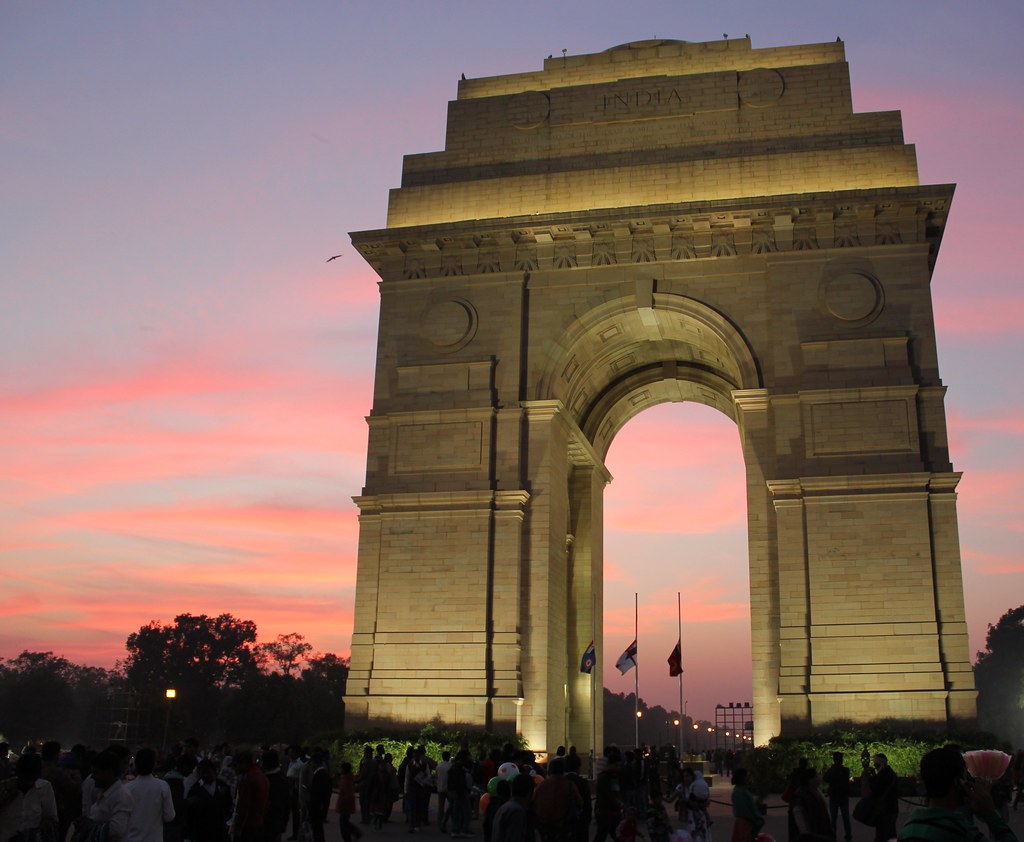
 North India. Photo: mckaysavage / flickr, BY 2.0.
North India
Delhi is most people's entry point: Old Delhi's lanes and street food, Humayun's Tomb and India Gate cover the essentials in a couple of days.
 West India. Photo: the opoponax / flickr, BY 2.0.
West India
Mumbai is India's most cosmopolitan city: Colaba, Marine Drive and the street food of Mohammed Ali Road are the highlights, though it's noticeably more expensive than the rest of the country.
 South India. Photo: Dimitry B / flickr, BY 2.0.
South India
Kerala's backwaters around Alleppey and Kochi's colonial old town are the headline draws, alongside Varkala's clifftop beach for a slower stop.
 East India. Photo: Arian Zwegers / flickr, BY 2.0.
East India
Kolkata's colonial architecture, coffee houses and food scene reward a slower visit than most people give it. Darjeeling, up in the hills of West Bengal, is known for its tea estates and the toy train up from New Jalpaiguri.
 Northeast India. Photo: Alessandra Kocman / flickr, BY-NC-ND 2.0.
Northeast India
Assam's Kaziranga National Park is one of the best places in the world to see one-horned rhinos, and Guwahati is the usual gateway in.
India covers five distinct travelling regions, and most backpacker trips pick two or three rather than attempting all of them in one go. For a proper feel of any of these cities, a Guruwalk-style tip-based walking tour is worth booking on arrival. Our Outpacker chatbot can help you build a realistic regional itinerary rather than trying to force all five into one trip.
Getting around
Compare time, comfort and cost
Trains are the backbone of getting around India and one of the best ways to experience the country – book through IRCTC or a booking agent like Confirmtkt well ahead for popular routes, especially sleeper class on long overnight journeys.
Train
Sleeper (non-AC) and AC classes both run on the same routes at very different price points; sleeper class is the classic backpacker choice and part of the experience, though book early as popular routes sell out days in advance.
Bus
State-run and private long-distance buses cover routes trains don't, and are generally the faster option for shorter regional hops.
Taxi/Rideshare
Uber and Ola both operate in major cities and are the easiest way to avoid haggling with auto-rickshaws; insist on the meter or the app fare if you do take a rickshaw instead.
Plane
Domestic budget carriers (IndiGo, SpiceJet, Air India Express) make long hops across the country affordable and save days of overland travel – often worth it for reaching the South or Northeast from the North.
Download offline maps, keep key booking details available without data and avoid placing an international departure immediately after a fragile overland transfer.
Culture and events
Events worth knowing about
Dates can shift, so verify the current programme before building a trip around an event in India.
A national parade and cultural festival, with the largest procession in Delhi featuring military displays and state floats.
A colour festival marking the arrival of spring, with crowds throwing coloured powder and water in the streets.
A festival of lights marking the victory of light over darkness, with homes, streets and temples strung with lamps and fireworks lighting up the night for several days running.
A religious festival centred on elaborate, temporary shrines (pandals) built across Kolkata, celebrating the goddess Durga with processions and immersion ceremonies on the final day.
A livestock and cultural fair where thousands of camels and cattle are traded alongside folk music, fairground rides and a striking desert backdrop.
Confirm the official programme, accommodation pressure and transport changes before committing non-refundable plans.
Indian food
Discover the flavours that make India memorable
India's food is one of the biggest reasons people come, and it changes completely from region to region.
-
 Thalia full plate of regional dishes, rice, bread and pickles, the best way to sample a region's cooking in one sitting.Photo: Sudhamshu / flickr, BY-NC 2.0
 -
 Butter Chicken and NaanNorth Indian staples, worth trying in Delhi where the dish originated.Photo: chicgeekuk / flickr, BY-NC-ND 2.0
 -
 Masala Dosaa South Indian crispy rice-and-lentil crepe, best from a proper Tamil Nadu or Karnataka udupi restaurant.Photo: yumievriwan / flickr, BY-NC-ND 2.0
 -
 BiryaniHyderabad's version is the one most people rate highest, though regional variations are everywhere.Photo: Pranjal Mahna / flickr, BY-NC-ND 2.0
 -
 Chaatsavoury street snacks (pani puri, bhel puri, aloo tikki), Delhi and Mumbai both do this exceptionally well.Photo: Shreyans Bhansali / flickr, BY-NC-SA 2.0
 -
 Vada PavMumbai's answer to a burger, a spiced potato fritter in a bread roll, sold on every street corner.Photo: Rajesh_India / flickr, BY-NC-ND 2.0
 -
 MomosTibetan-style dumplings, especially good in Darjeeling and the Northeast.Photo: shankar s. / flickr, BY 2.0
 -
 Paneer Tikkamarinated, grilled cottage cheese, a reliable vegetarian option almost everywhere.Photo: Mahin Fayaz / flickr, BY 2.0
Visible turnover is a useful guide. Explain allergies carefully and carry a translated note when an ingredient could cause a serious reaction.
Hostels
Choose the atmosphere, not just the bed
Zostel – India's biggest hostel chain, with locations across almost every major backpacker stop, known for consistent quality and social common areas.
Backpackers Heaven
New Delhi, IndiaProperty image from Hostelworld's official HOSCAR record.View photos and details →Dreamyard Udaipur
Udaipur, IndiaProperty image from Hostelworld's official HOSCAR record.View photos and details →Hostel Mantra
Udaipur, IndiaProperty image from Hostelworld's official HOSCAR record.View photos and details →Dreams Hostel (Vagator)
Goa, IndiaProperty image from Hostelworld's official HOSCAR record.View photos and details →Zostel Delhi
Paharganj, New Delhi, IndiaA central branch of India's established Zostel network, useful for New Delhi rail connections and the classic northern route. Check current facilities and recent reviews before booking.
Property image from the linked Hostelworld listing.View photos and details →Joey's Hostel Agra
Tajganj, Agra, IndiaIncluded for its location within walking distance of the Taj Mahal and the rooftop view highlighted in the client's guide. Compare recent reviews and current facilities before booking.
Property image from the linked Hostelworld listing.View photos and details →What you need to pack
Pack for the route, not every possibility
Check our trip planner for a kit list built around your specific dates and route, since what you need changes enormously depending on whether you're chasing beaches, mountains or cities.
Climate and clothing
India's real packing challenge is range: you might be sweating through 40°C heat in Rajasthan one week and layering up against near-freezing nights in the Himalayas the next.
- A scarf or dupatta – doubles as temple/mosque modesty cover, dust protection on overnight buses, and a layer against hill-station cold.
- Earplugs – Indian cities and trains are loud around the clock; worth it for sleeping through the night.
- One more to flag: many temples and mosques require covered shoulders and knees (and head covering for some), so keep one modest outfit accessible even mid-trip.
Rain and terrain
Cotton is fine for short city stints but slow to dry and unpleasant in monsoon-season humidity – pack it as a minority of your kit, not the default.
- DEET mosquito repellent – dengue and chikungunya are both present and there's no vaccine for either; bite avoidance is the main defence.
- Hand sanitiser and a basic first aid kit – plasters, rehydration sachets and something for an upset stomach, since "Delhi belly" catches most travellers at least once.
Hostels and travel days
Laundry is cheap and widely available through hostels and local dhobi services, so you can travel light either way.
- A universal adapter and power bank – India runs on Type C/D/M sockets at 230V, and long train journeys eat phone battery fast.
- Padlocks – for hostel lockers and securing bags on trains.
Activities and health
Add specialist equipment only for booked activities and current health guidance.
- A reusable water bottle with a filter – tap water isn't drinkable, and this cuts down on plastic bottle waste significantly over a long trip.
- Run your exact route through the trip planner to fine-tune this for the regions and season you're covering.
Language
A few Hindi phrases go a long way
Hindi is the most widely useful language across North, Central and West India, and English is spoken to a good working level in most tourist-facing businesses, hotels and hostels nationwide.
| English | Say it in Hindi | Pronunciation |
|---|---|---|
| Hello | Namaste | nuh-mus-tay |
| Goodbye | Alvida (al-vee-dah) / Phir milenge (feer mi-len-gay), more commonly used | As written |
| Yes / No | Haan (haan) / Nahi | nuh-hee |
| How much? | Kitna hai? | kit-nuh hai |
| How are you? | Aap kaise hain? | aap kay-say hain |
| Please | Kripya | krip-yuh |
| Do you speak English? | Kya aap Angrezi bolte hain? | kyaa aap an-gray-zee bol-tay hain |
| Help, please | Madad kijiye | muh-dud kee-jee-yay |
| Where are you from? | Aap kahan se hain? | aap kuh-haan say hain |
| What is your name? / My name is... | Aapka naam kya hai? / Mera naam... hai | aap-kaa naam kyaa hai / may-raa naam... hai |
| Thank you | Dhanyavaad | dhan-yuh-vaad |
| Use the phrases respectfully: A quirk worth flagging: Hindi isn't the everyday language in much of the South (Tamil Nadu, Kerala, Karnataka, Andhra Pradesh) or the Northeast, where English is the more reliable fallback rather than a second choice. | ||
Visa requirements
Check the rule for your passport
Entry rules depend on nationality, journey and length of stay. Confirm the current rule before booking, then check it again shortly before departure.
Check your exact requirements
Use Sherpa to review entry requirements for your passport and journey. Also confirm passport validity, permitted stay, proof of onward travel and any current arrival-form requirements.
Vaccinations
Make the advice fit your route
Vaccination and health advice depends on your route, duration, medical history and activities.
Review current CDC guidance
Read the current CDC India traveller guidance, then discuss personal recommendations with a qualified clinician.
Arrange appropriate travel insurance and keep policy details available offline. Consider the practical risks created by climate, altitude, insects, animals, water activities and road travel on your specific route.
Safety and common scams
Standard caution, specific habits
India is safe for the vast majority of the country and the vast majority of backpacker trips – millions of independent travellers pass through every year without serious incident, and it's a well-worn first-time destination for a reason.
Gem, silk and "tourist office" shop diversions
A rickshaw or taxi driver agrees your route, then detours to a shop paying them commission, sometimes claiming an official tourist office sent you. Politely decline and restate your destination, or just walk in, browse two minutes and leave.
Train station touts
Someone in plain clothes claims your train is cancelled or the ticket office has moved, then steers you to a "helpful" travel agent charging inflated prices. Verify directly at the official enquiry counter or on the IRCTC app.
Taxi and rickshaw overcharging
Especially from airports and stations. Insist on the meter, or use Uber/Ola, which fixes the price upfront.
Fake sadhus and blessing scams
Someone offers a blessing, a flower, or a photo, then demands payment afterwards. A firm no before anything is handed to you avoids the awkward follow-up.
Spiked food or drink on long train journeys
A rare but real risk from accepting food or drink from strangers on overnight trains. Stick to sealed, packaged items if offered anything at all.
ATM skimming
More common at standalone machines than bank-branch ATMs. Use machines attached to a bank building where possible and cover the keypad when entering your PIN.
None of this should put you off the trip – just keep the same street-smart habits you'd use in any big, busy country, and the risk drops right down.
Sources and feedback
Help us keep this guide useful
Travel information changes. Verify current entry, health, safety and transport guidance before booking or travelling.
If you spot anything that could be improved, corrected or updated, please use our contact page or email hello@outpacker.co.uk.
If any information is outdated or incorrect, Outpacker assumes no liability.